
Your Complete Agribusiness Strategy, Financial Forecasting & Operations Blueprint
Why a Farm Business Plan Is the Difference Between Failure and a Multi-Million Dollar Harvest
Every year, thousands of aspiring farmers pour their life savings into the soil — and walk away with nothing. Not because they lacked passion, skill, or hard work. They failed because they had no plan.
A farm business plan is not bureaucratic paperwork. It is your strategic weapon — the document that tells you exactly where you are going, how you will get there, and what it will cost you to succeed. The U.S. Department of Agriculture reports that farms with a documented business plan are significantly more likely to secure financing, weather market downturns, and scale profitably within five years.
Whether you are launching a solar farm business plan, building out a poultry farm business plan, or refining a dairy farm business plan for a generational operation, the fundamentals remain the same: clarity, financial rigor, and a market-driven strategy.
This master guide walks you through every component of a professional farm business plan — from the executive summary to financial projections — with dedicated sections for specialized farm types, a step-by-step writing guide, a checklist for beginners, and 20 high-value FAQs that answer the real questions farmers are asking in 2026.
Let’s build your blueprint for agricultural success.
What Is a Farm Business Plan? (And Why You Need One in 2026)
A farm business plan is a formal written document that defines your agricultural enterprise’s goals, operations, market position, and financial outlook. Think of it as the DNA of your agribusiness — a living, working document that guides every major decision.
In 2026, the agriculture sector faces a unique set of pressures: climate volatility, rising input costs, evolving consumer demand for sustainable products, and increasing competition from vertically integrated agri-corporations. Operating without a business plan in this environment is not just risky — it is reckless.
Banks, grant agencies, and investors all require a farm business plan before releasing a single dollar. The USDA Farm Service Agency, the Small Business Administration, and most state agricultural departments use your business plan as the primary document for credit and grant evaluation. Without it, financing is essentially impossible.
Key Benefits of a Farm Business Plan
- Clarifies your vision and prevents costly strategic drift
- Provides a roadmap for operational efficiency and resource allocation
- Strengthens loan applications and grant proposals
- Enables accurate cash flow management and financial forecasting
- Identifies potential risks before they become farm-ending crises
- Helps attract business partners, investors, and key staff
| Pro Insight Lenders don’t fund dreams — they fund documented plans. A well-written farm business plan with realistic financial projections will open doors that passion alone never could. |
The 6 Core Components of a High-Quality Farm Business Plan
A professional farm business plan is built on six foundational pillars. Each section serves a distinct purpose, and together they form a complete picture of your agribusiness strategy. Here is a breakdown of each component.

1. Executive Summary
The executive summary is the first thing any reader sees — and it will determine whether they read the rest. Despite appearing first, write it last. It should compress your entire farm business plan into a compelling one-to-two page overview.
Your executive summary must answer five questions immediately: What does your farm produce? Who is your target market? What is your revenue model? What funding are you seeking? What makes your operation different from every other farm in your region?
Avoid vague language. ‘We plan to grow vegetables’ is weak. ‘We operate a 40-acre certified organic vegetable farm targeting wholesale grocery accounts in the greater Chicago metro, projecting $380,000 in Year 1 revenue’ is an executive summary that gets read.
2. Mission Statement and Business Overview
Your mission statement defines why your farm exists beyond profit. In the modern agriculture business model, mission matters more than ever. Consumers, lenders, and partners want to know your values.
This section should cover your legal business structure (LLC, sole proprietorship, partnership, corporation), your physical location and acreage, your primary and secondary products or services, your founding story, and your short-term and long-term business objectives.
3. Market Analysis
Market analysis is where most farm business plans fall short. Farmers often skip this section or fill it with generic statistics. That is a fatal mistake. Lenders and investors want hyper-local, data-driven intelligence about your specific market.

Your market analysis should include a target customer profile (who buys your product, why, and at what price point), a competitive analysis (who else is farming your niche in your geography and what their pricing looks like), an industry trend analysis (which direction is the market moving), and a demand forecast (is there unmet demand you can capture).
Use USDA NASS data, USDA Economic Research Service reports, state extension office publications, and local farmers market data to build a credible, evidence-based market picture.
| Market Analysis Element | What to Include | Data Sources |
| Target Market | Age, income, buying behavior, geography | Census data, extension surveys |
| Competition | Nearby farms, pricing, product differentiation | Local market visits, USDA data |
| Demand Trends | Organic, local, specialty food growth | USDA ERS, Nielsen reports |
| Pricing Analysis | Market rates for your products | USDA AMS Market News |
| Distribution Channels | Direct-to-consumer, wholesale, CSA, online | Market research, farmer networks |
4. Operational Plan
The operational plan is your farm’s engine room. It tells readers exactly how your farm functions day to day, season to season. This is where your expertise as a farmer shines through — and where you demonstrate that you can execute your vision.
Cover your land and facility details, production systems and methods, equipment inventory and procurement plan, crop or livestock management cycle, harvest and post-harvest handling, staffing plan and organizational chart, and your supply chain from input procurement to product delivery.
For lenders, the operational plan proves that your revenue projections are achievable. If you project $500,000 in annual poultry sales, your operational plan must show the flock size, feed conversion ratios, processing capacity, and distribution logistics that support that number.
5. Financial Projections
Financial projections are the heartbeat of your farm business plan. This section determines whether your agribusiness is viable — and whether a bank will lend you money. Most farm business plans need at least three years of financial projections, and five years is ideal for capital-intensive operations like dairy or solar farms.
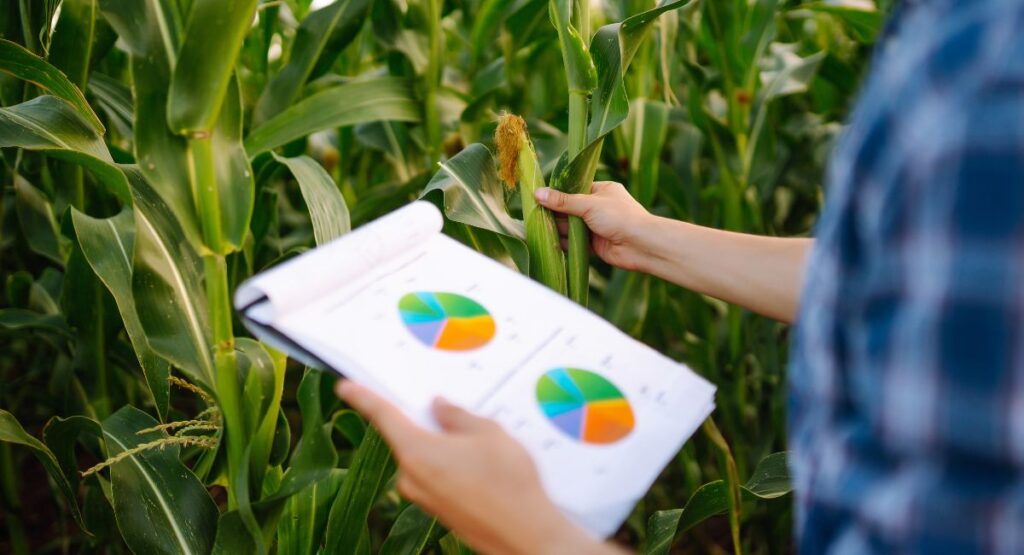
Your financial section should include a startup cost analysis, monthly cash flow statements for Year 1, a profit and loss (income) statement, a balance sheet, a break-even analysis, and your funding request with proposed use of funds.
Be conservative in your revenue estimates and thorough in your expense projections. Nothing destroys credibility faster than inflated projections that any experienced lender can spot immediately.
| Financial Document | Purpose | Key Metrics to Include |
| Startup Cost Analysis | Total capital needed to launch | Land, equipment, seed, permits, working capital |
| Cash Flow Statement | Monthly liquidity management | Revenue timing vs. expense timing |
| Income Statement | Profitability over time | Gross margin, net profit by year |
| Balance Sheet | Net worth snapshot | Assets, liabilities, owner equity |
| Break-Even Analysis | Minimum viable revenue | Fixed costs divided by contribution margin |
6. Risk Management and Exit Strategy
Every sophisticated farm business plan includes a risk section. Agriculture is inherently risky — weather, commodity price volatility, pest pressure, labor shortages, and market shifts can all threaten your operation. Lenders know this and expect you to address it proactively.
Identify your top five operational risks. For each risk, document the probability, potential financial impact, and your mitigation strategy. Common mitigation tools include crop insurance, diversified revenue streams, forward contracts, irrigations systems, and emergency operating reserves.
Include a brief exit strategy as well. This is not pessimism — it demonstrates planning maturity and protects your personal financial position if the business needs to wind down or transfer ownership.
Farm Business Plans by Type: Solar, Poultry, and Dairy
While the core structure of a farm business plan applies universally, different farm types require specialized focus areas. Here are three of the most in-demand farm business plan types in 2026, with specific guidance for each.
Solar Farm Business Plan: Capitalizing on the Renewable Energy Boom
A solar farm business plan is fundamentally different from a traditional agricultural plan. You are not growing a crop — you are generating electricity and selling it under long-term power purchase agreements (PPAs). This distinction shapes every section of your plan.
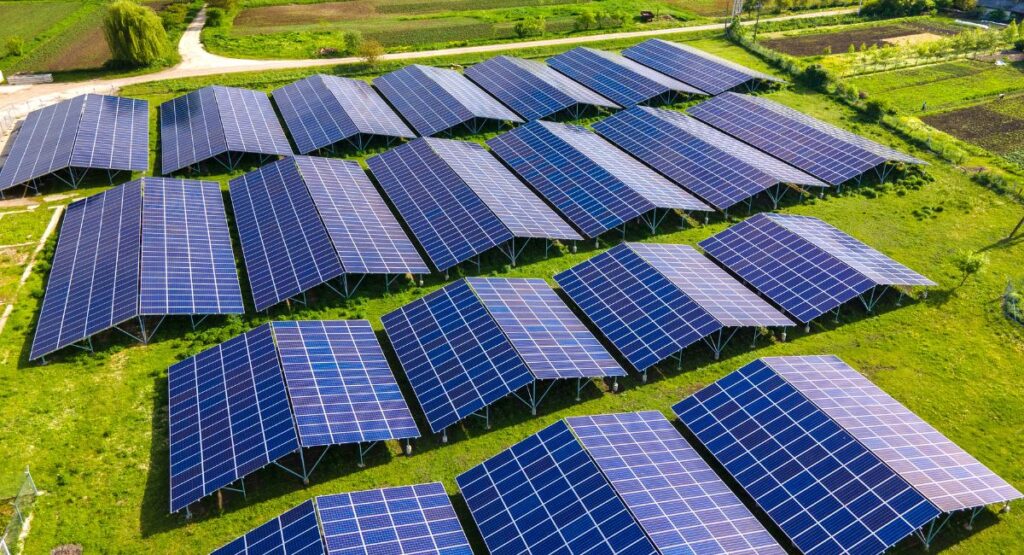
Revenue model: Most solar farms generate income through PPAs with utility companies or direct corporate offtake agreements. These contracts typically run 20-25 years, which makes solar farms attractive to lenders. Your financial projections must model kilowatt-hour (kWh) production based on solar irradiance data for your specific location, system degradation rates over time, and applicable utility rates and net metering policies.
Key elements unique to a solar farm business plan include land lease or ownership analysis (solar farms typically require 5-10 acres per megawatt of capacity), grid interconnection feasibility and costs, permitting timeline and costs by state or jurisdiction, system sizing and panel technology selection, operations and maintenance cost structure, and federal Investment Tax Credit (ITC) impact on financial projections.
Capital requirements are substantial. A utility-scale solar farm (1-5 MW) typically requires $1M-$4M in capital investment before any power is generated. Your business plan must demonstrate a clear path to positive cash flow, which typically begins in Year 2-3 after commercial operation date.
Financing options specific to solar include USDA Rural Energy for America Program (REAP) grants covering up to 25% of eligible project costs, DOE loan programs, state-level green energy incentives, and tax equity financing structures. Every one of these funding sources will require a professional solar farm business plan.
Poultry Farm Business Plan: Scaling Protein Production Profitably
The global protein demand surge makes a well-crafted poultry farm business plan one of the strongest investment cases in modern agriculture. Whether you are targeting broiler production, laying hen operations, turkey farming, or specialty poultry (heritage breeds, free-range), your business plan must demonstrate
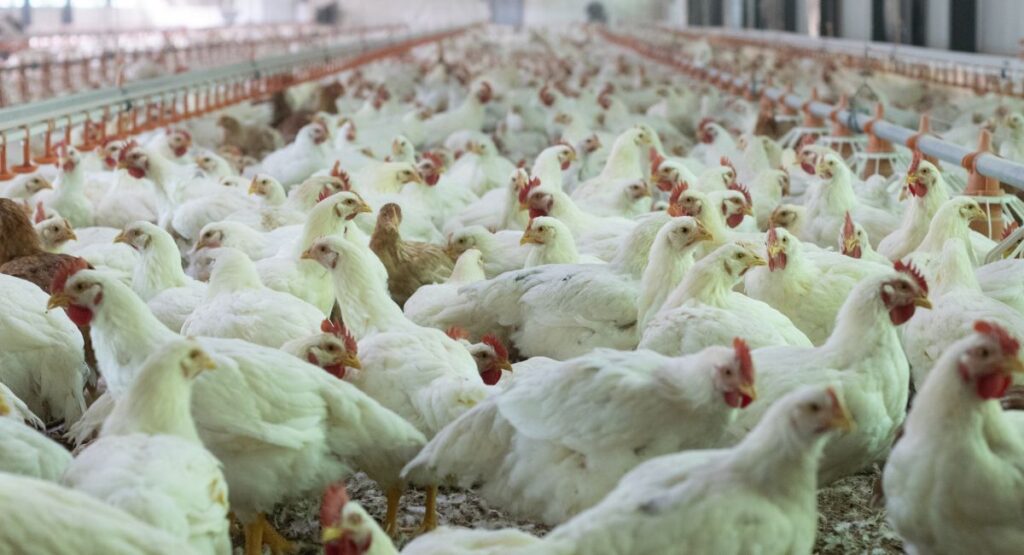
production efficiency and market access.
The most critical decision in a poultry farm business plan is your production model: contract growing or independent operation. Contract growing (working with integrators like Tyson, Perdue, or Koch Foods) offers stable income and input supply but limited pricing control. Independent operations offer higher margins but require you to establish your own market access, feed sourcing, and processing logistics.
Your operational plan must include flock size and rotation schedule, house specifications and biosecurity protocols, feed conversion ratios and projected feed costs (feed represents 60-70% of production costs), mortality rate assumptions, processing and slaughter logistics, and waste management and environmental compliance plan.
Financial benchmarks for broiler operations: A single modern broiler house (typically 40×500 feet) costs $350,000-$500,000 to build and can produce approximately 150,000 birds per year across six flocks. Contract growers typically earn $0.05-$0.08 per pound of live weight delivered, with net income per house ranging from $25,000 to $60,000 annually depending on performance.
Key risks to address in your poultry farm business plan include avian influenza and disease outbreaks, feed commodity price volatility, environmental regulation compliance (particularly around nutrient management), water usage, and ammonia emissions.
Dairy Farm Business Plan: Building Long-Term Equity in a Commodity Market
A dairy farm business plan requires more long-term thinking than almost any other agricultural enterprise. Dairy cows represent a multi-year investment, dairy infrastructure is capital-intensive, and milk markets are governed by federal milk marketing orders that affect pricing in ways that smaller operators have limited control over.
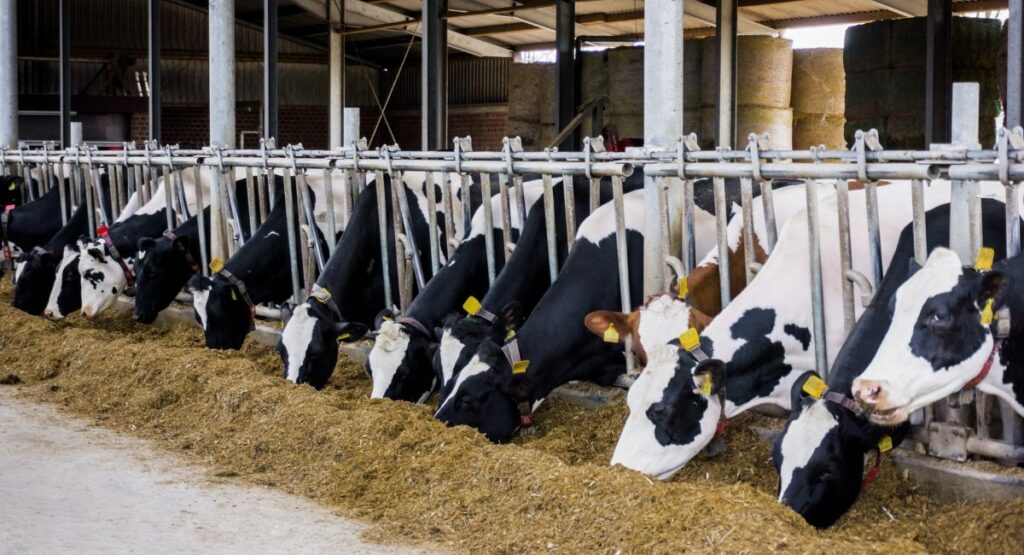
The milk pricing environment in 2026 requires careful financial modeling. Your dairy farm business plan should incorporate Class I, II, III, and IV milk prices, component pricing (butterfat, protein, other solids), and your mailbox price analysis based on your regional market. USDA Agricultural Marketing Service publishes monthly data that should anchor your projections.
Operational elements specific to a dairy farm business plan include herd size and breed selection (Holstein, Jersey, or crossbreds optimized for component production), milking system (parlor type, robotic milking, frequency), dry cow management and reproduction program, heifer development program and replacement rate, nutritional program and forage production plan, and DHIA or DHI milk recording enrollment for performance tracking.
Financial benchmarks: The cost of producing 100 pounds (hundredweight, cwt) of milk ranges from $18 to $24 on well-managed operations, with larger operations achieving lower per-unit costs through economies of scale. Break-even milk price for most mid-size dairies (100-500 cows) is approximately $19-$22/cwt. A dairy farm business plan should model scenarios at multiple milk price levels to demonstrate resilience.
Value-added dairy is one of the fastest-growing segments. If your plan includes on-farm processing for artisan cheese, fluid milk, yogurt, or ice cream, include a separate revenue section addressing the FSMA (Food Safety Modernization Act) compliance costs, Grade A facility requirements, and direct-to-consumer marketing strategy.
Small Farm Business Ideas: Profitable Niches for New Operators
You do not need 5,000 acres to build a profitable agricultural enterprise. The most dynamic growth in American and European farming in recent years has come from small, specialized operations that leverage premium market positioning, direct consumer relationships, and high-value crops or products. Here are the most compelling small farm business ideas.success in small farming start with the right your small scale operation, check out our guide on How to Grow 25 Backyard Veggetables for a High Vitamin Natural Pharmacy.

- Microgreens and sprouts production: Low startup cost ($5,000-$15,000), fast crop cycles (7-14 days), premium pricing ($25-$50/flat wholesale). Ideal for urban and peri-urban operators.
- Specialty mushroom cultivation: Oyster, shiitake, lion’s mane, and maitake command $8-$20/pound at farmers markets. A 1,000 sq ft growing space can generate $60,000-$120,000 annually.
- Pastured pork and heritage breed beef: Direct-to-consumer models (freezer beef, pork shares, farm store) achieve 3-5x commodity pricing. Strong brand story essential.
- Cut flower farming: One acre of mixed cut flowers can generate $25,000-$100,000 per season through farmers markets, florists, and U-Pick operations.
- Lavender and herb farming: High margins, agritourism potential, and value-added product opportunities (essential oils, dried herbs, sachets, personal care products).
- Aquaponics and indoor vertical farming: Capital-intensive but highly productive per square foot. Best positioned near urban centers with premium food retail access.
- Pastured egg production: 1,000 laying hens on a rotational pasture system can generate $100,000+ in annual revenue at $7-$10/dozen direct-to-consumer pricing.
How to Write a Farm Business Plan: Step-by-Step Writing Guide
Writing a farm business plan does not require a business degree. It requires honesty, research, and a commitment to working through each section methodically. Follow this step-by-step guide to produce a lender-ready, investor-grade document.
Step-by-Step Farm Business Plan Writing Process
- Research your market before you write a single word. Pull USDA NASS data for your commodities, visit local farmers markets, interview potential buyers, and understand your competitive landscape. This research will make every other section stronger.
- Define your farm concept with precision. What exactly will you produce? For whom? Through which sales channels? Write one clear sentence that captures your farm’s core value proposition.
- Complete your operational planning. Map out your production system, facilities, equipment needs, and staffing requirements. Be specific — vague operational plans signal inexperience.
- Build your financial model. Use a spreadsheet to model startup costs, monthly cash flows, and annual income statements for three to five years. Start with expenses (which are knowable) before projecting revenue.
- Write the body sections in order: Mission & Overview, Market Analysis, Operational Plan, Financial Projections, Risk Management. Leave the Executive Summary for last.
- Write the Executive Summary last, drawing from the strongest points in each completed section. Keep it to one to two pages maximum.
- Review for clarity and accuracy. Have a trusted advisor, extension agent, or accountant review your financial projections specifically.
- Format professionally. Use clean formatting, logical headings, and a table of contents. Lenders review dozens of plans — presentation matters.
- Include all supporting documents as appendices: financial statements, leases, permits, resumes, product photos, market research data, and letters of intent from buyers.
- Update your plan annually. A farm business plan is a living document. Market conditions, input costs, and your operation itself will change — your plan should reflect reality at all times.
Checklist for Beginners: Is Your Farm Business Planing Complete?
Before you submit your farm business plan to any lender, grant agency, or investor, run through this checklist. Every item should be complete and documented.
Executive Summary Checklist
- Farm name, legal structure, and location included
- Primary products or services clearly defined
- Target market identified with specificity
- Funding request amount and use of funds stated
- Year 1-3 revenue projections summarized
Market Analysis Checklist
- Detailed target customer profile completed
- At least 3 competitors analyzed with pricing data
- Market size and growth trend data included
- Distribution and sales channel strategy documented
Operational Plan Checklist
- Land, buildings, and equipment inventory complete
- Production cycle and seasonal calendar documented
- Staffing plan with roles and compensation outlined
- Permits, licenses, and regulatory compliance addressed
Financial Projections Checklist
- Complete startup cost breakdown included
- Monthly Year 1 cash flow statement completed
- 3-year income statement projections included
- Break-even analysis calculated and documented
- All financial assumptions documented and defensible
- Risk section with top 5 risks and mitigations included
Frequently Asked Questions About Farm Business Plans
These are the most common, most searched, and most critical questions from farmers and agribusiness entrepreneurs working through the business planning process.
How long should a farm business plan be?
How much capital is needed to start a farm?
Is farming profitable in 2026?
How do I get government grants for my farm?
Can I use a farm business plan template?
Do I need a business plan for a small hobby farm?
How do I value my farm for the balance sheet?
What is the best legal structure for a farm?
How do I write a farm business plan with no farming experience?
What USDA loan programs are available for new farmers?
Your Farm Business Plan: The First Harvest
Agriculture has always rewarded those who work smart as well as hard. In 2026, with tighter credit conditions, rising input costs, and fierce competition for premium market positioning, working smart starts with a plan.
Your farm business plan is not a one-time document you file and forget. It is the strategic foundation upon which every significant farm decision will be made — from the equipment you purchase to the markets you pursue to the employees you hire. Treat it with the same care you give your soil.
Whether you are building a solar farm business plan to capitalize on the renewable energy transition, refining a poultry farm business plan to scale your protein operation, crafting a dairy farm business plan to navigate the complexities of milk markets, or developing a small farm business idea into a full commercial enterprise, the process is the same: research deeply, plan honestly, project conservatively, and execute relentlessly.
The farms that will define agricultural success over the next decade are being planned right now. Your plan starts today.
| Free Resources to Get Started USDA Beginning Farmers: farmers.gov | USDA FSA Loans: fsa.usda.gov | Extension Farm Business Planning: extension.org | SCORE Free Mentoring: score.org | USDA NASS Data: nass.usda.gov |
For informational purposes only. Consult a qualified agricultural lender, extension specialist, or financial advisor for guidance specific to your operation.