By Farm Life HQ | Sustainable Agriculture & Nutrition Experts
The Forgotten Pharmacy in Your Backyard Vegetable Garden
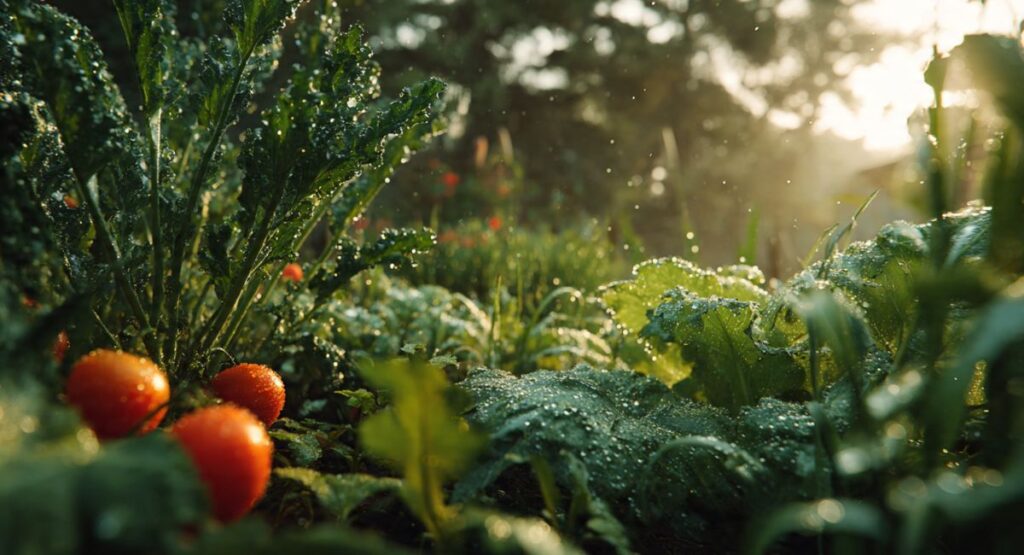
Picture this: the morning sun filters through dewdrops on emerald kale leaves, each one a living capsule of vitamin K. A vibrant red tomato dangles heavy on the vine, bursting with lycopene that could rival any supplement bottle. This isn’t a scene from an artisan farm catalog—this is your backyard, transformed into nature’s most powerful pharmacy.
In 2026, as healthcare costs soar and synthetic supplements dominate shelves, a quiet revolution is taking root in suburban gardens across America and Europe. Home gardeners are rediscovering what our ancestors knew: the soil beneath our feet holds the blueprint for optimal health. The connection between sustainable agriculture and human vitality has never been more crucial.
This comprehensive guide introduces 25 nutrient-dense vegetables that transform any small backyard into a natural pharmacy. These aren’t exotic superfoods requiring specialized knowledge—they’re kitchen essentials that beginners can cultivate with confidence. Each plant delivers concentrated vitamins, minerals, and phytonutrients that support immunity, energy, and longevity. From soil health to harvest, we’ll explore how organic yield meets therapeutic nutrition in your own garden ecosystem.
Why Grow Your Own Natural Pharmacy?
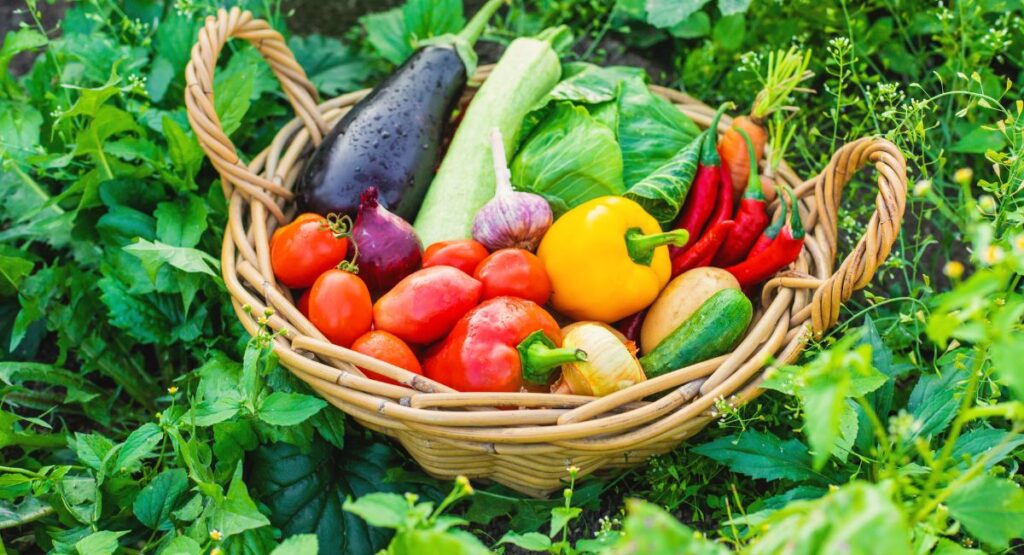
The journey from seed to plate is more than cultivation—it’s a declaration of food sovereignty. When you grow your own vegetables, you control nutrient density from soil composition to harvest timing. Commercial produce often travels thousands of miles, losing up to 50% of key vitamins during transport and storage. Your backyard pharmacy delivers peak nutrition within hours, not weeks.
Key Benefits of Home Vegetable Gardening:
- Maximum nutrient retention through immediate harvest and consumption
- Complete control over soil health and organic growing methods
- Cost savings: $600-$1,200 average annual grocery reduction
- Therapeutic outdoor activity reducing stress and improving mental health
- Environmental impact: zero food miles and plastic-free harvest
- Teaching children sustainable agriculture and nutrition awareness
The vegetables in this guide are specifically chosen for beginner-friendly cultivation, exceptional vitamin content, and versatility in kitchen essentials. Whether you’re managing a chronic condition, boosting family immunity, or simply pursuing optimal wellness, these 25 plants form the foundation of preventive health care.
The 25 Essential Vegetables: Your Backyard Vegetable Garden Pharmacy Guide
Each vegetable below is a powerhouse of specific vitamins and minerals. We’ve focused on cultivation ease, space efficiency, and therapeutic nutrition to help you build a complete home pharmacy. The vitamin profiles highlighted represent peak concentrations when harvested at optimal maturity.
1. Tomatoes (Solanum lycopersicum)
The crown jewel of backyard gardens, tomatoes deliver lycopene—a powerful antioxidant protecting against cellular damage and supporting cardiovascular health. Rich in vitamins C, K, and potassium, one medium tomato provides 28% of daily vitamin C needs. Thrives in containers or ground beds with 6-8 hours of sun.
Primary Vitamins: Vitamin C (ascorbic acid), Vitamin K1, Vitamin A (as beta-carotene), Lycopene, Potassium
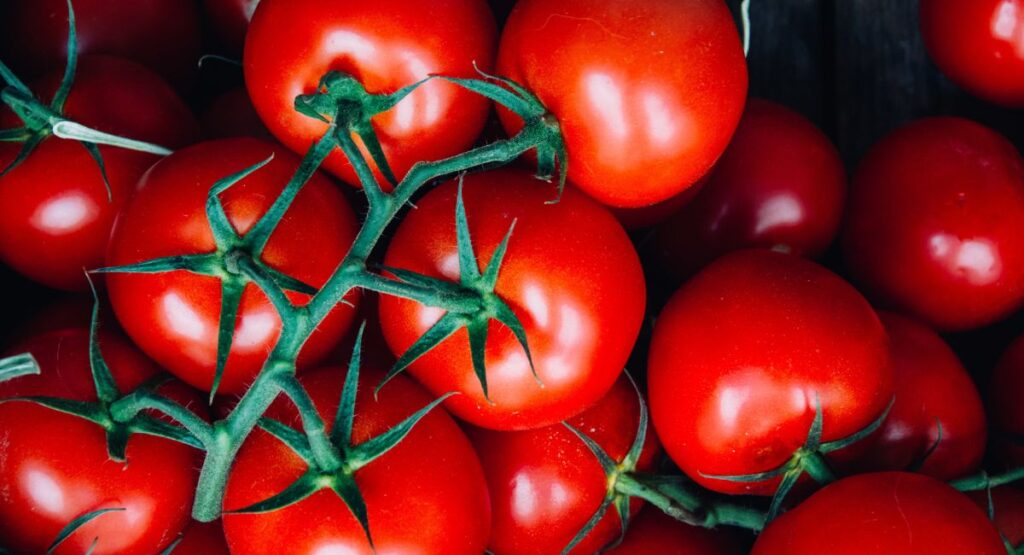
The Gateway to Backyard Pharmacy Success
Soil & Sunlight: Tomatoes thrive in rich, well-draining organic soil with pH 6.0-6.8. They demand full sun—minimum 6-8 hours daily for optimal fruit production and lycopene concentration. Amend garden beds with aged compost or worm castings to boost nutrient-density. For container gardening, choose pots minimum 18 inches deep with drainage holes.
Planting & Harvest Timeline: Start seeds indoors 6-8 weeks before last frost, or purchase seedlings for immediate planting. Transplant when soil reaches 60°F, burying stems deep to encourage robust root systems. Stake or cage plants immediately to support heavy fruit loads. Cherry varieties harvest in 60-70 days; beefsteak types require 80-90 days. The transition from green to full color signals peak vitamin content—harvest when fruits release easily from the vine with gentle pressure.
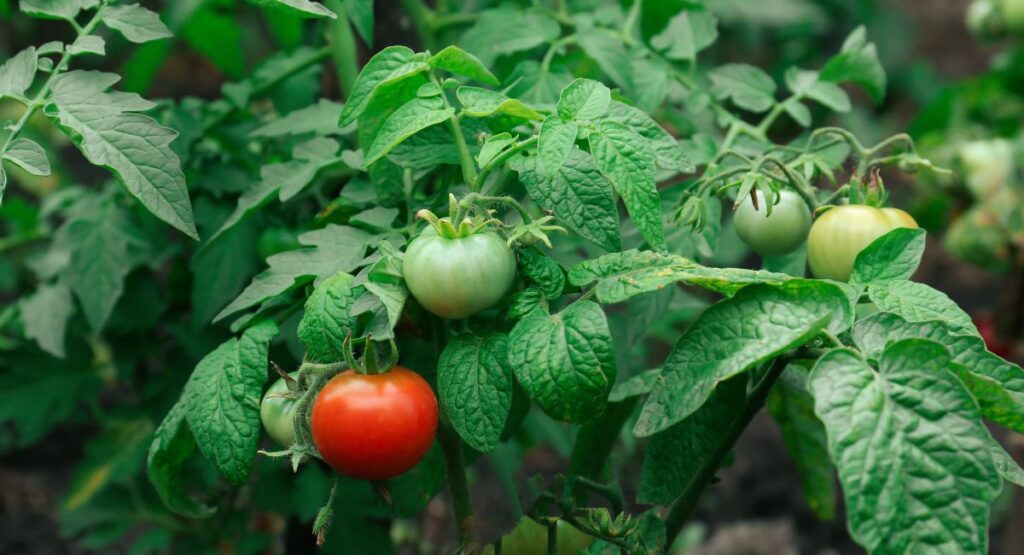
2. Kale (Brassica oleracea var. sabellica)
Nutritional royalty, kale packs more vitamin K than any common vegetable—one cup provides 684% of daily requirements. This cruciferous superfood supports bone density, blood clotting, and anti-inflammatory pathways. Cold-hardy and pest-resistant, kale grows vigorously in spring and fall, tolerating light frost that sweetens its flavor.
Primary Vitamins: Vitamin K (phylloquinone), Vitamin A, Vitamin C, Manganese, Calcium, Copper
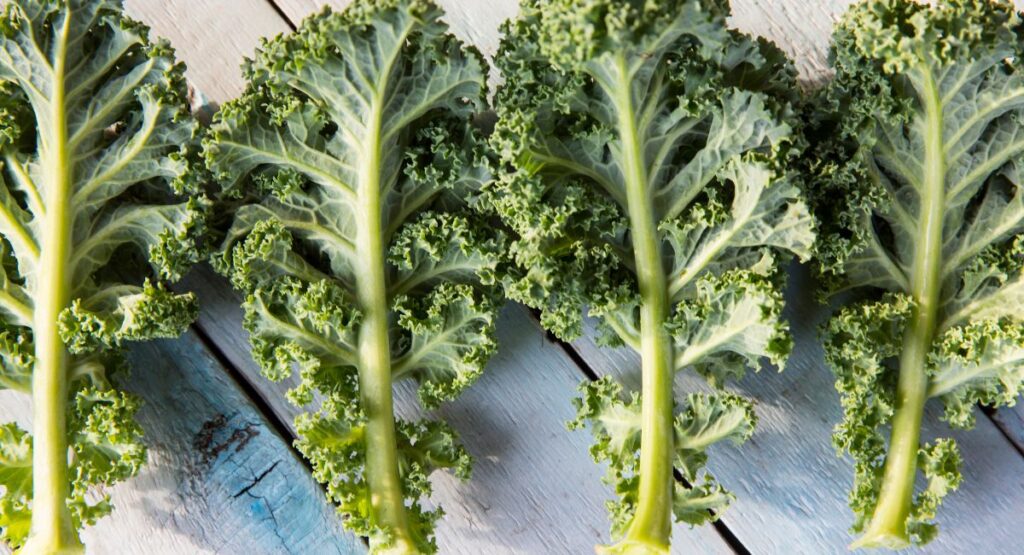
Cold-Hardy Nutrition Powerhouse
Soil & Sunlight: Kale adapts to various soil types but excels in nitrogen-rich organic matter with pH 6.0-7.5. While it tolerates partial shade, full sun (6+ hours) maximizes vitamin K production and leaf density. Cold-tolerant nature makes it ideal for spring and fall planting in most climates. Container cultivation works excellently with 12-inch deep pots.
Planting & Harvest Timeline: Direct seed outdoors 3-5 weeks before last spring frost, or 6-8 weeks before first fall frost. Plant seeds ½-inch deep, spacing 12 inches apart. Seedlings emerge in 7-14 days. Begin harvesting outer leaves at 30 days when plants reach 8-10 inches tall, using cut-and-come-again method for continuous production. Light frost sweetens flavor by converting starches to sugars—kale actually improves after exposure to 28-30°F temperatures. Mature plants withstand winters in zones 7-10, providing fresh greens year-round.
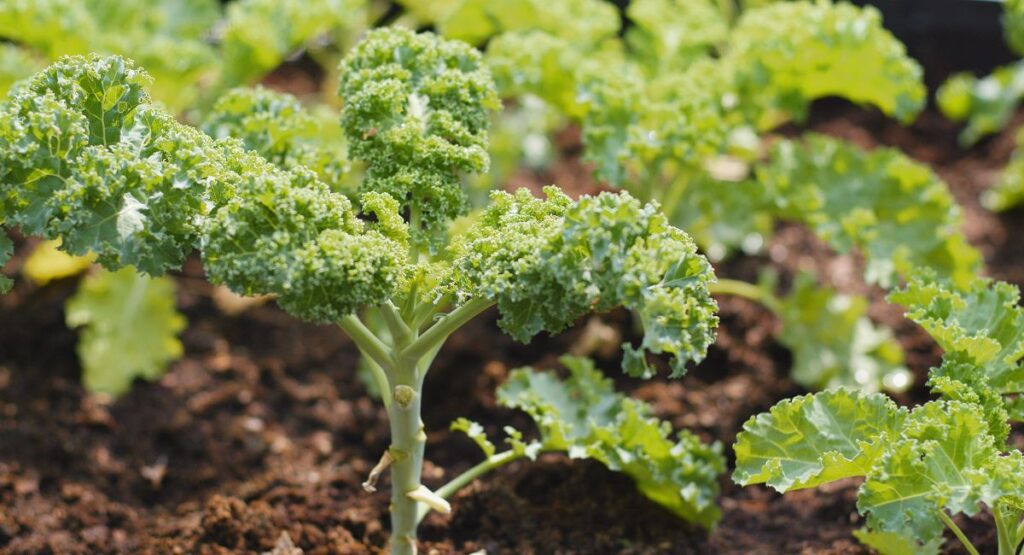
3. Spinach (Spinacia oleracea)
A rapid-growing powerhouse, spinach delivers iron, folate, and magnesium in abundance. One cup of cooked spinach provides 36% of daily magnesium needs—crucial for muscle function, nerve transmission, and blood glucose control. Grows quickly in cool weather, perfect for succession planting every two weeks for continuous harvest.
Primary Vitamins: Iron, Folate (Vitamin B9), Vitamin K1, Vitamin A, Magnesium, Manganese
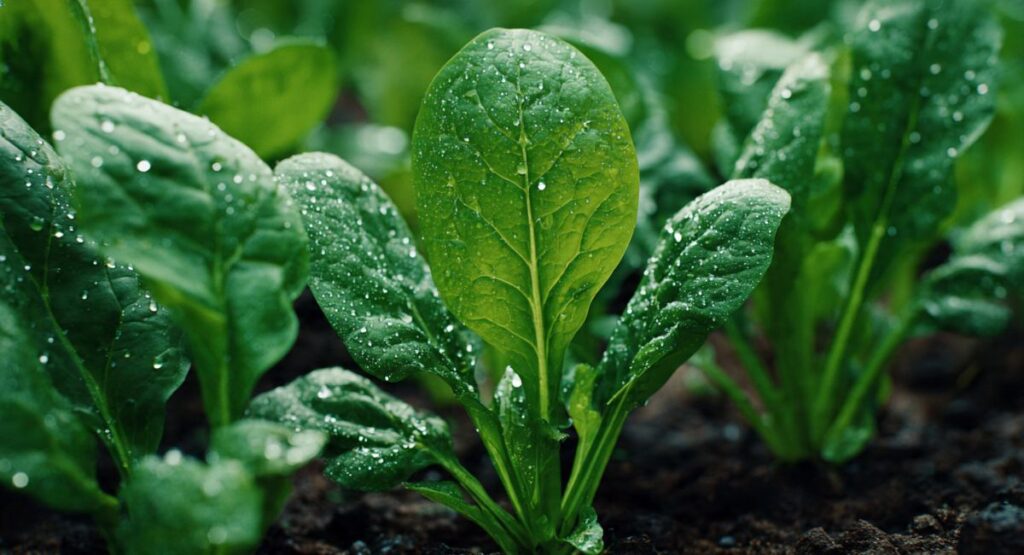
Fast-Growing Iron-Rich Greens
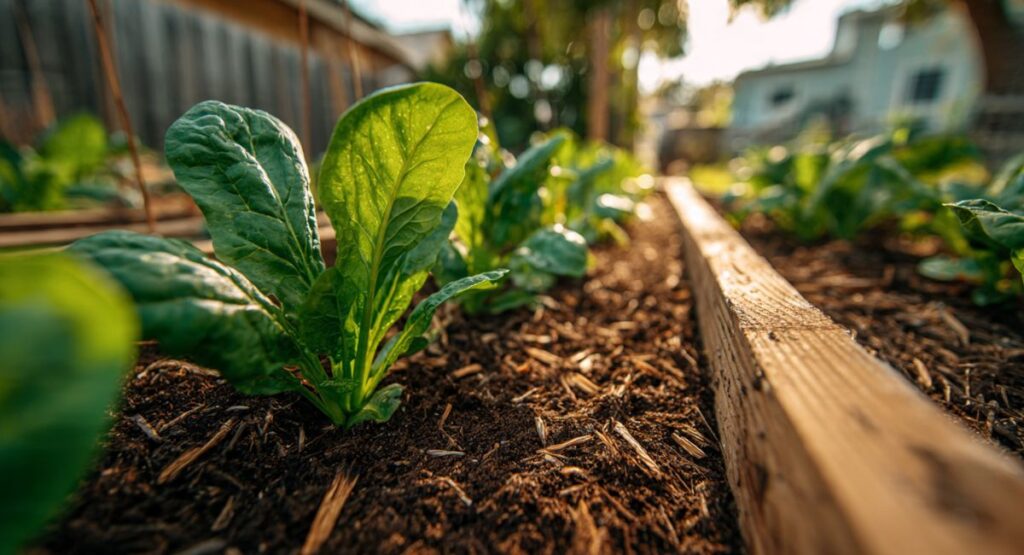
Soil & Sunlight: Spinach requires fertile, well-draining soil rich in organic matter with pH 6.5-7.0. This cool-season crop tolerates partial shade, making it perfect for spring gardens before taller plants cast shadows. Maintain consistent soil moisture for tender leaf development. Excels in raised beds and containers with minimum 6-8 inch depth.
Planting & Harvest Timeline: Direct seed as soon as soil can be worked in spring, or plant successive crops every 2 weeks for continuous harvest through cool weather. Seeds germinate in 7-14 days at soil temperatures 45-75°F. Plant ½-inch deep in rows 12 inches apart. Baby spinach harvests begin at 25-30 days; full-size leaves at 40-50 days. Hot weather (above 75°F) triggers bolting—harvest entire plants before flower stalks form. Fall planting 8 weeks before first frost provides exceptional nutrient-density as plants respond to cooling temperatures.
4. Bell Peppers (Capsicum annuum)
Red bell peppers contain three times more vitamin C than oranges—one pepper delivers 169% of daily needs. This makes them exceptional for immune support, collagen synthesis, and iron absorption. Peppers transition from green to vibrant red, yellow, or orange, with vitamin content peaking at full color maturity. Warm-season crop perfect for containers.
Primary Vitamins: Vitamin C, Vitamin A, Vitamin B6, Vitamin E, Folate, Potassium
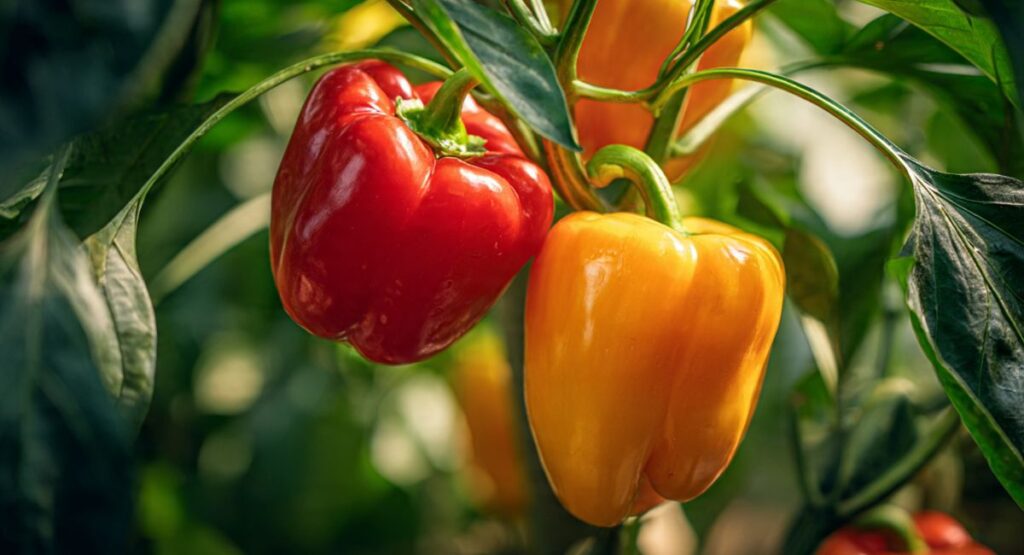
Vitamin C Champions of Summer
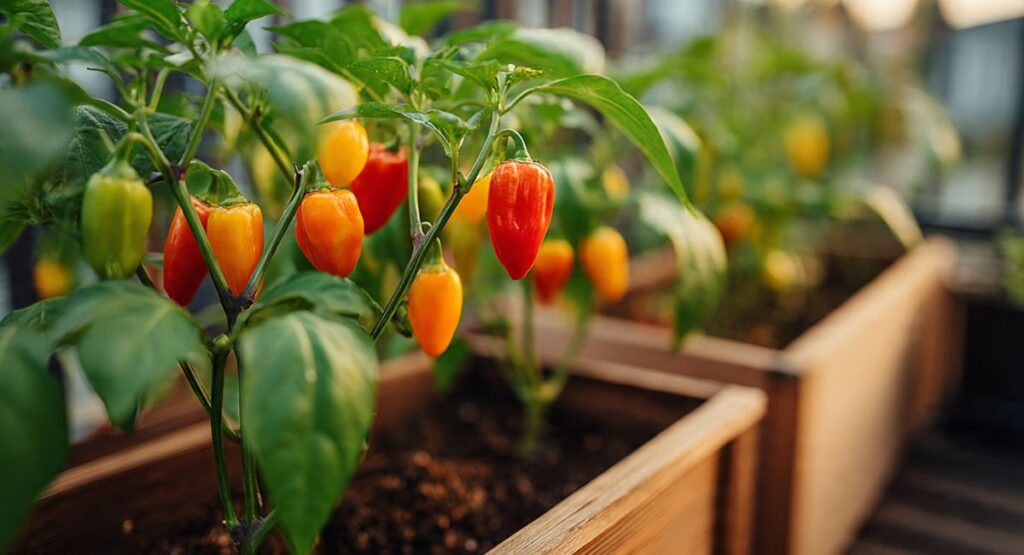
Soil & Sunlight: Peppers demand full sun—8+ hours minimum—and warm, well-draining organic soil with pH 6.0-6.8. Heat-loving plants requiring soil temperatures minimum 65°F for optimal growth. Add compost and balanced organic fertilizer at planting. Container gardening succeeds with 5-gallon pots in sunny locations. Black mulch or landscape fabric warms soil and suppresses weeds.
Planting & Harvest Timeline: Start seeds indoors 8-10 weeks before last frost, maintaining 80-85°F soil temperature for germination. Transplant seedlings after danger of frost passes and nighttime temperatures stay above 55°F. Space plants 18-24 inches apart in garden beds. Green peppers harvest at 60-80 days; allowing peppers to fully mature to red, yellow, or orange requires 80-100 days but triples vitamin C content. The color transition signals peak nutrition—harvest when peppers feel firm and glossy, cutting (not pulling) from plants to avoid damage.
5. Carrots (Daucus carota subsp. sativus)
Root vegetables extraordinaire, carrots deliver beta-carotene that converts to vitamin A—essential for vision, immune function, and skin health. One medium carrot provides 184% of daily vitamin A needs. Loose, sandy soil produces straight roots; containers work excellently for shorter varieties. Sweetness intensifies after light frost exposure.
Primary Vitamins: Vitamin A (beta-carotene), Vitamin K1, Biotin, Potassium, Vitamin B6
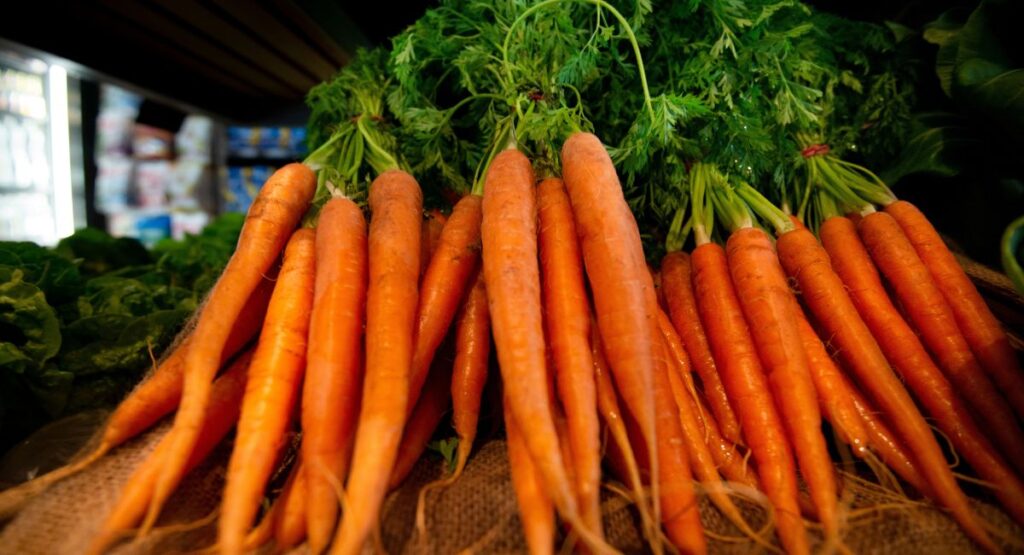
Underground Beta-Carotene Gold
Soil & Sunlight: Carrots require loose, well-draining sandy loam free of rocks and debris that cause forking. Heavy clay soils need significant amendment with sand and compost, or choose container cultivation. Full sun (6-8 hours) produces sweetest roots with highest beta-carotene. Optimal pH: 6.0-6.8. For containers, use at least 12 inches depth; choose shorter varieties like Chantenay for shallow spaces.
Planting & Harvest Timeline: Direct seed 2-3 weeks before last spring frost, or plant successive crops every 3 weeks through late summer for fall harvest. Tiny seeds need shallow planting (¼-inch) and consistent moisture for germination (10-21 days). Thin seedlings to 2-3 inches apart when tops reach 2 inches tall—crowding produces misshapen roots. Harvest timeline varies by variety: baby carrots at 50-60 days, standard varieties 70-80 days. Light frost sweetens flavor as starches convert to sugars. In mild climates, mulch heavily and harvest through winter as needed.
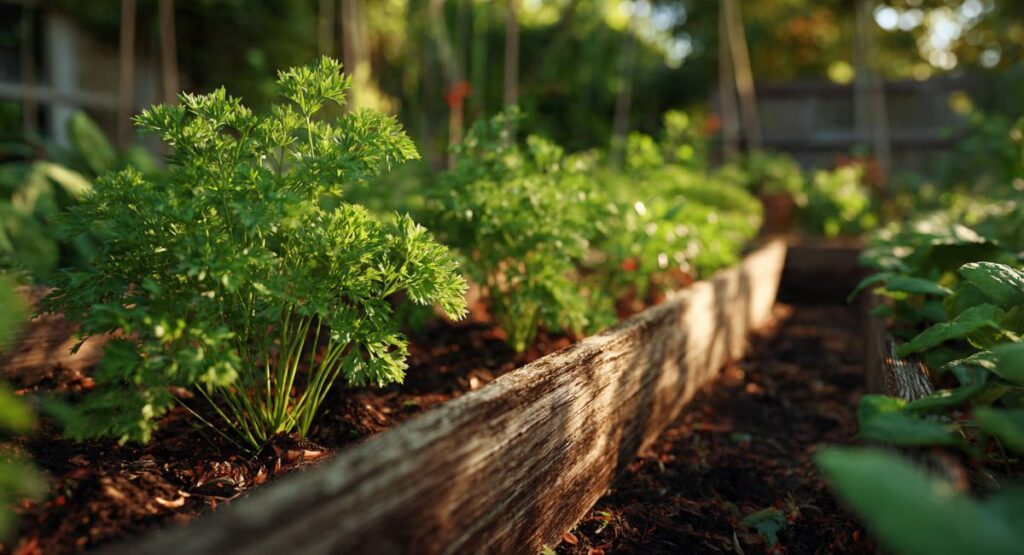
6. Zucchini (Cucurbita pepo)
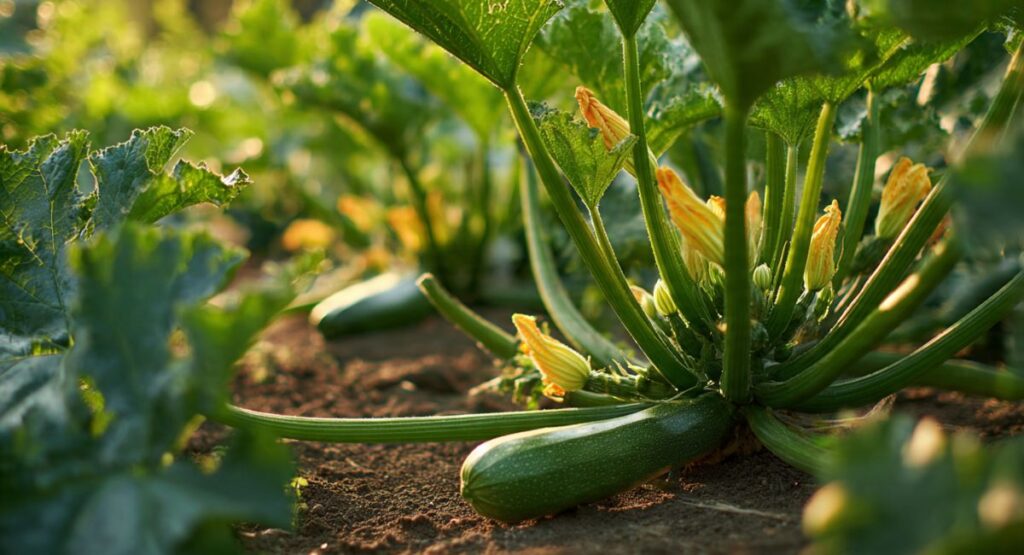
Prolific summer squash that delivers manganese, vitamin C, and potassium with minimal calories. One cup provides 19% of daily manganese—vital for bone health, metabolism, and antioxidant defense. Single plants produce 6-10 pounds of fruit weekly at peak season. Flowers are edible, offering delicate nutrition in gourmet preparations.
Primary Vitamins: Manganese, Vitamin C, Vitamin A, Potassium, Folate, Vitamin B6
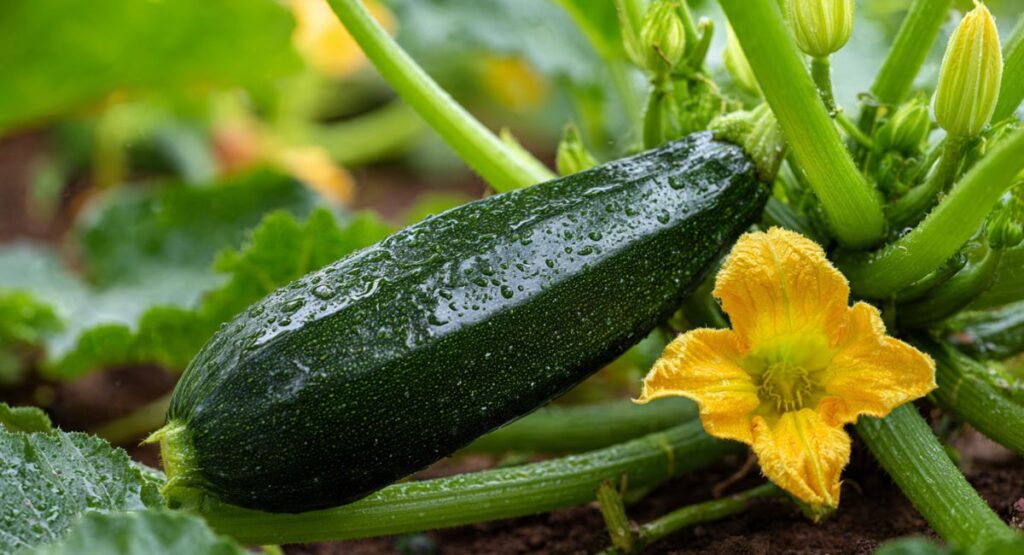
Prolific Summer Squash Producer
Soil & Sunlight: Zucchini thrives in rich, well-draining organic soil with pH 6.0-7.5. Full sun (8+ hours) essential for fruit production. These heavy feeders benefit from generous compost or aged manure amendments. Warm soil requirement: minimum 60°F for germination. Single plants spread 3-4 feet, so space accordingly. Container gardening requires minimum 24-inch diameter, 18-inch deep pots.
Planting & Harvest Timeline: Direct seed after last frost when soil reaches 70°F, or start indoors 2-3 weeks earlier in peat pots (zucchini resents transplanting). Plant seeds 1 inch deep, 3-4 feet apart. Germination occurs in 7-10 days. First harvest begins at 45-55 days when fruits reach 6-8 inches long—this size ensures tender texture and peak nutrient-density. Daily checking essential during peak production; overgrown fruits become woody and suppress further flowering. Single plants can produce 6-10 pounds weekly through summer. Hand-pollinate if necessary using male flowers to transfer pollen to female flowers (those with tiny fruit behind bloom).
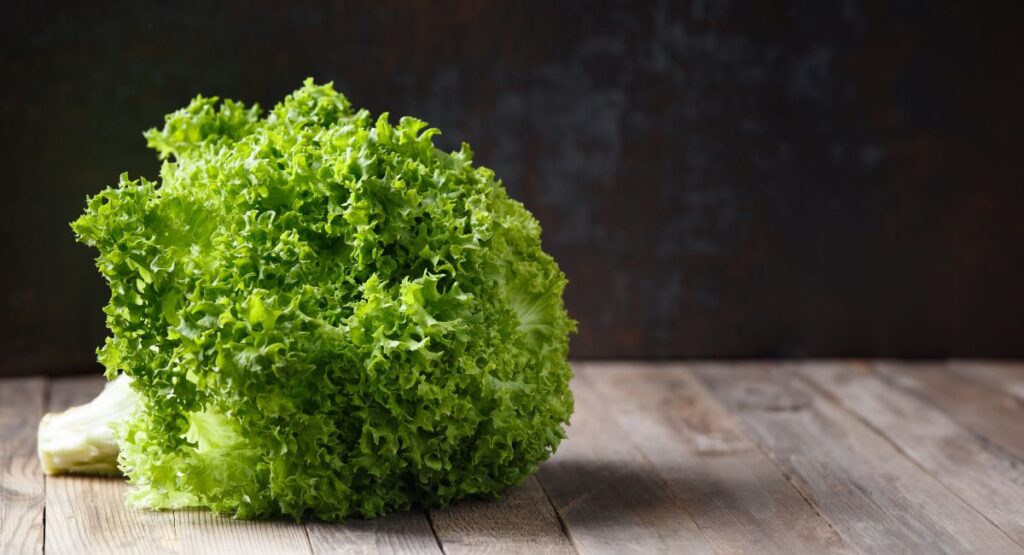
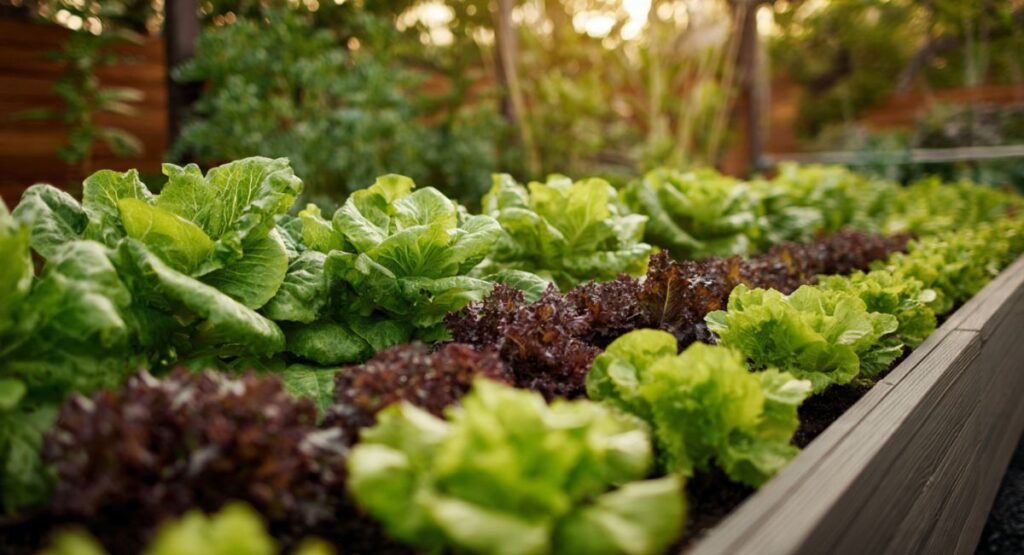
7. Lettuce (Lactuca sativa)
Fast-growing salad base rich in vitamin K, folate, and iron. Darker varieties like romaine and red leaf contain significantly more nutrients than iceberg. Vitamin K supports blood clotting and bone metabolism; two cups provide over 100% daily needs. Grows in 30 days, perfect for continuous harvesting using cut-and-come-again method.
Primary Vitamins: Vitamin K, Vitamin A, Folate, Iron, Vitamin C, Potassium
Quick-Growing Salad Foundation
Soil & Sunlight: Lettuce grows in moderately fertile, well-draining organic soil with pH 6.0-7.0. Cool-season preference means it tolerates partial shade, especially beneficial in warm climates where afternoon shade prevents bolting. Consistent moisture critical for tender leaf development. Shallow roots make it ideal for container gardening in 6-8 inch deep pots or window boxes.
Planting & Harvest Timeline: Direct seed or transplant seedlings in early spring as soon as soil can be worked, or plant successive crops every 2 weeks through cool season. Seeds need light for germination—plant shallowly (¼-inch) and maintain moisture. Germination: 7-14 days at 60-70°F. Leaf varieties harvest begins at 30-45 days using cut-and-come-again method (cut outer leaves, allowing center to continue growing). Head lettuce requires 60-80 days for full maturity. Heat above 75°F triggers bitter flavor and bolting—shade cloth extends spring season. Fall planting 6-8 weeks before first frost provides sweetest, most nutrient-dense greens.
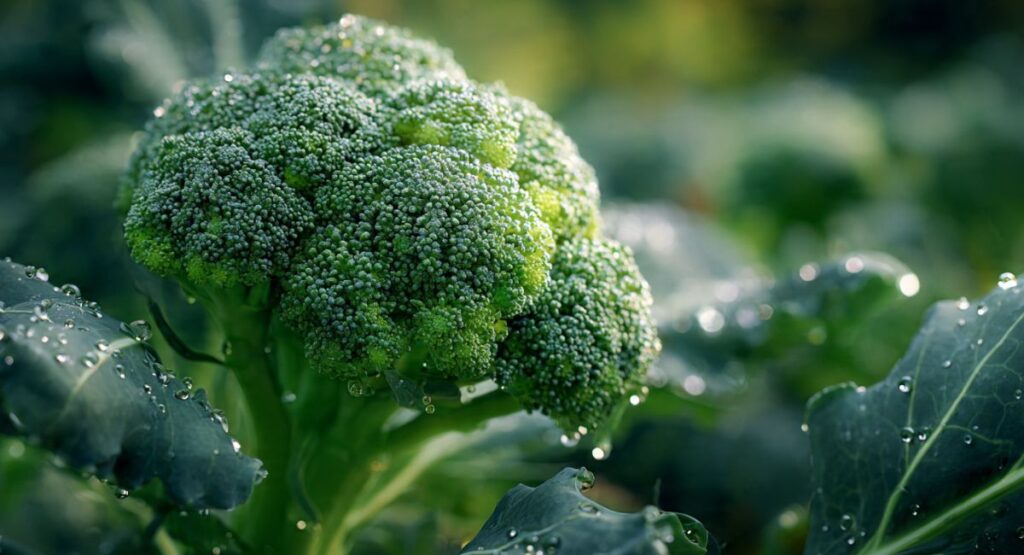
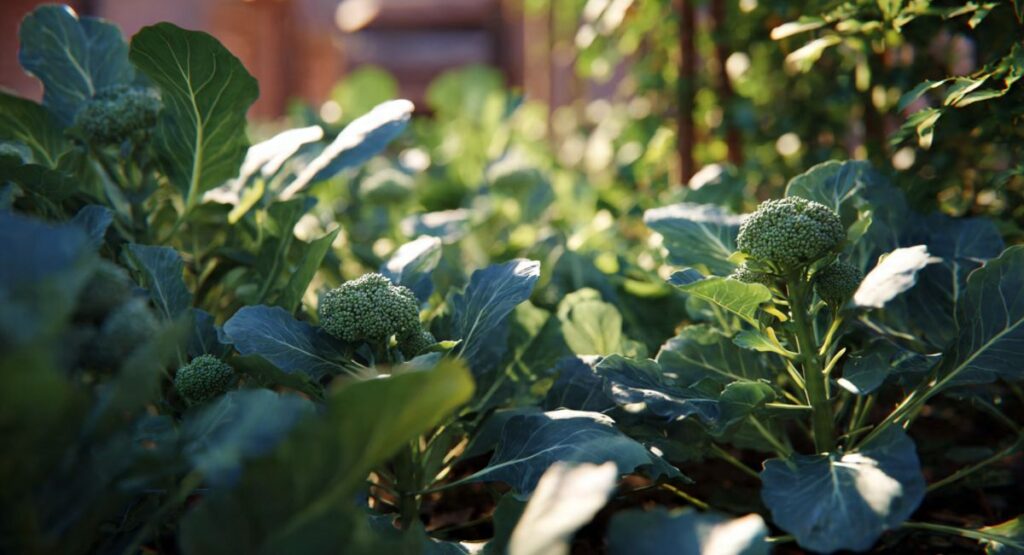
8. Broccoli (Brassica oleracea var. italica)
Cruciferous champion containing sulforaphane, a compound studied for cancer-protective properties. One cup delivers 135% of daily vitamin C and 116% of vitamin K needs. Cool-season crop that thrives in spring and fall. After cutting the main head, side shoots continue producing smaller florets for weeks of extended harvest.
Primary Vitamins: Vitamin C, Vitamin K, Folate, Chromium, Vitamin A, Fiber
Cruciferous Cool-Season Champion
Soil & Sunlight: Broccoli requires rich, fertile organic soil with pH 6.0-7.0 and excellent drainage. Full sun (6-8 hours) essential for head development and sulforaphane production. Heavy feeder benefiting from compost and balanced organic fertilizer. Cool-season crop performing best in temperatures 60-70°F. Consistent moisture prevents stress that causes premature heading or bitter flavor.Planting & Harvest Timeline: Start seeds indoors 5-7 weeks before last spring frost, or direct seed for fall harvest 85-100 days before first frost. Transplant seedlings when they have 3-4 true leaves, spacing 18-24 inches apart. Germination: 7-14 days at 70-80°F. Main head harvest occurs 60-90 days from transplanting when buds are tight and deep green—before any yellow flowers appear. Cut main head 5-6 inches below, leaving plant intact. Side shoots continue producing smaller florets for weeks, extending harvest and delivering continuous nutrition. Light frost improves flavor; moderate freeze (28-30°F) can enhance sweetness.
9. Swiss Chard (Beta vulgaris subsp. cicla)
Ornamental and nutritious, chard delivers exceptional vitamin K, magnesium, and vitamin A. Colorful stems—red, yellow, orange—add visual drama to gardens. One cup provides 716% of vitamin K needs, supporting bone health and blood clotting. Heat-tolerant unlike other leafy greens, producing continuously from spring through fall with proper watering.
Primary Vitamins: Vitamin K, Magnesium, Vitamin A, Vitamin C, Iron, Potassium
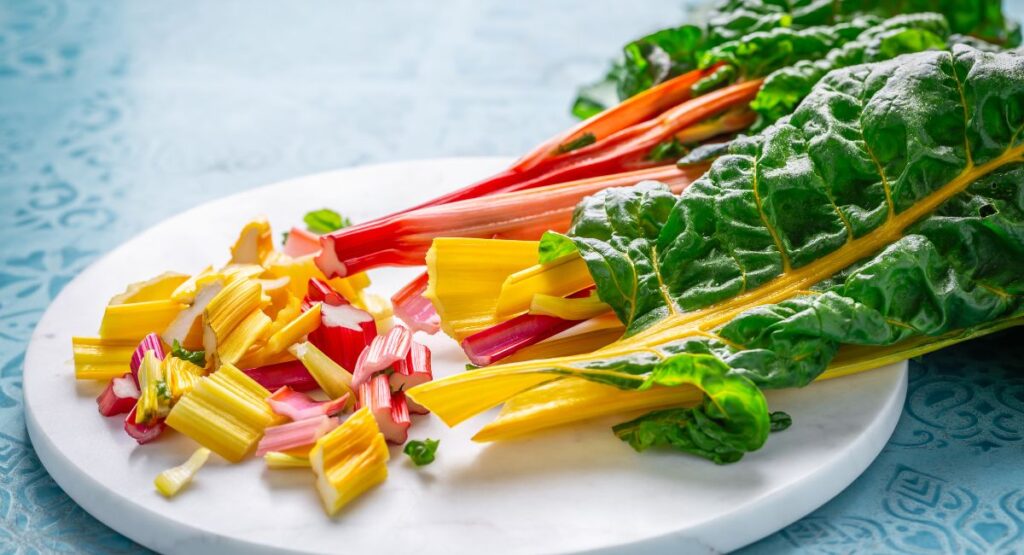
Heat-Tolerant Colorful Greens
Soil & Sunlight: Swiss chard adapts to various soil types but prefers fertile, well-draining organic matter with pH 6.0-7.0. Full sun (6+ hours) ideal, though it tolerates partial shade better than most vegetables. Heat-tolerant nature means it produces through summer when other greens fail. Consistent moisture prevents bitterness. Container-friendly with 12-inch minimum depth.
Planting & Harvest Timeline: Direct seed 2-3 weeks before last spring frost through mid-summer for continuous production. Plant seeds ½-inch deep, spacing 6 inches apart (thin to 12 inches as plants mature). Seeds are actually multi-germ clusters—thin seedlings accordingly. Germination: 7-14 days at 50-85°F. Begin harvesting outer leaves at 30 days when plants reach 6-8 inches tall. Cut-and-come-again method provides harvests for months—always leave 3-4 inner leaves for continued growth. Rainbow varieties maintain color intensity through season. Cold-hardy plants often survive light frosts and can produce into fall in most climates.
10. Green Beans (Phaseolus vulgaris)
Nitrogen-fixing legumes that improve soil health while delivering folate, vitamin K, and fiber. One cup provides 43% of vitamin K needs. Bush varieties produce all at once for canning; pole varieties climb trellises, producing continuously for 6-8 weeks. Excellent protein source for plant-based diets, supporting muscle repair and energy metabolism.
Primary Vitamins: Folate, Vitamin K, Vitamin C, Manganese, Fiber, Iron
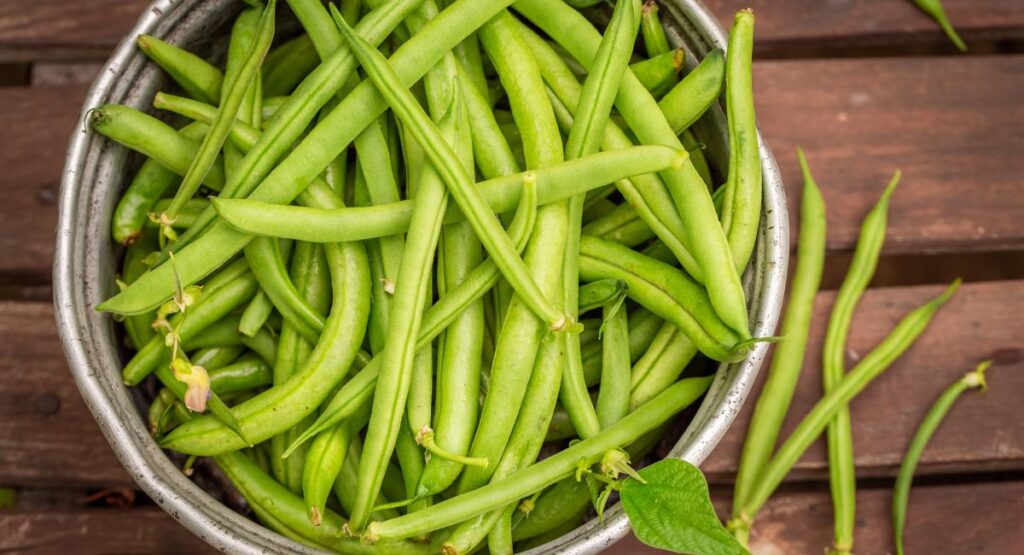
Nitrogen-Fixing Garden Allies
Soil & Sunlight: Green beans grow in average, well-draining soil with pH 6.0-7.0. Unlike heavy feeders, beans fix atmospheric nitrogen through root nodules, actually improving soil health for subsequent plantings. Full sun (6-8 hours) essential for pod production. Warm soil requirement: minimum 60°F for germination, optimal 70-80°F. Bush types suit containers (12-inch deep); pole varieties need trellis support.
Planting & Harvest Timeline: Direct seed after last frost when soil reaches 60°F. Plant seeds 1-1½ inches deep, spacing bush types 3-4 inches apart, pole varieties 6 inches apart along support structures. Germination: 7-14 days. Bush beans harvest begins at 50-55 days, producing concentrated yield over 2 weeks—ideal for preservation. Pole beans start at 60-70 days but produce continuously for 6-8 weeks when picked regularly. Harvest when pods are firm, crisp, and seeds barely visible—overripe pods become tough and halt further production. Morning picking ensures crispest texture and highest vitamin retention.
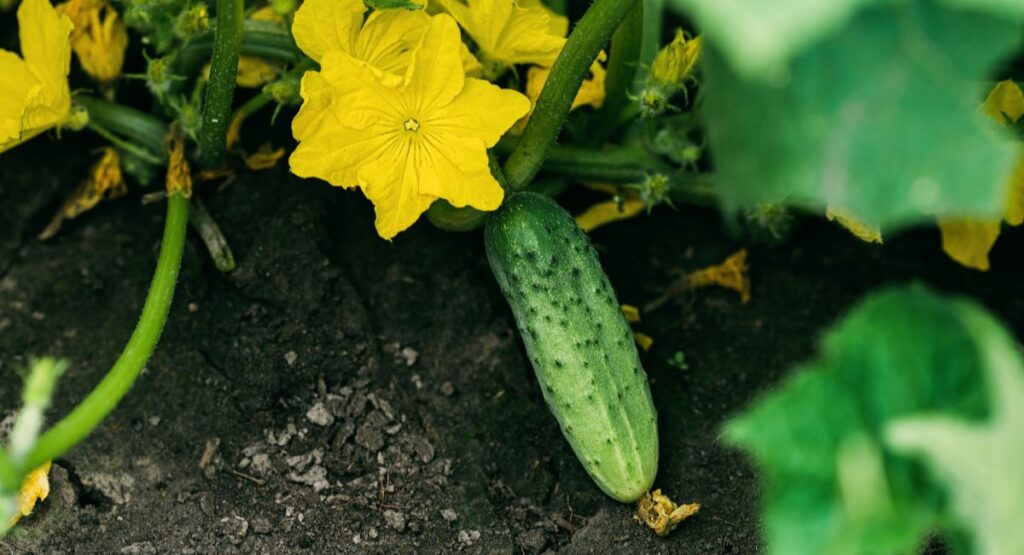
11. Cucumbers (Cucumis sativus)
Hydrating vegetables composed of 95% water, cucumbers deliver vitamin K, potassium, and silica for skin health. One cup provides 19% of vitamin K needs. Vining or bush varieties adapt to trellises or ground cultivation. Skin contains highest nutrient concentration—grow organically to eat unpeeled. Supports hydration, digestive health, and anti-inflammatory pathways.
Primary Vitamins: Vitamin K, Potassium, Vitamin C, Magnesium, Manganese, Silica
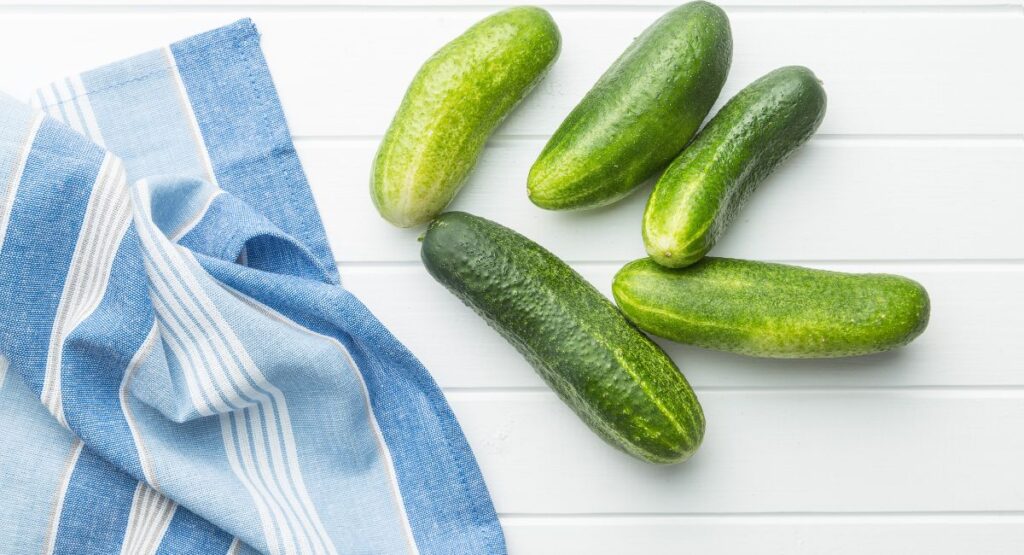
Hydrating Warm-Season Vines
Soil & Sunlight: Cucumbers require rich, well-draining organic soil with pH 6.0-7.0 and consistent moisture. Full sun (8+ hours) essential for fruit production and vitamin K concentration. Warm soil critical: minimum 70°F for germination and healthy growth. Amend with compost or aged manure. Vining types need trellis support (saves space, improves air circulation); bush varieties suit containers (5-gallon minimum).Planting & Harvest Timeline: Direct seed 1-2 weeks after last frost when soil reaches 70°F, or start indoors in peat pots 3-4 weeks earlier (cucumbers dislike transplanting). Plant seeds 1 inch deep, spacing bush types 36 inches apart, vining types 12 inches apart along trellises. Germination: 7-14 days. First harvest begins at 50-70 days depending on variety. Pick cucumbers when 6-8 inches long for slicing types, 4-6 inches for pickling. Daily harvesting during peak production essential—mature fruits left on vines signal plant to stop flowering, drastically reducing yield. Skin contains highest nutrient concentration, so grow organically to enjoy unpeeled.
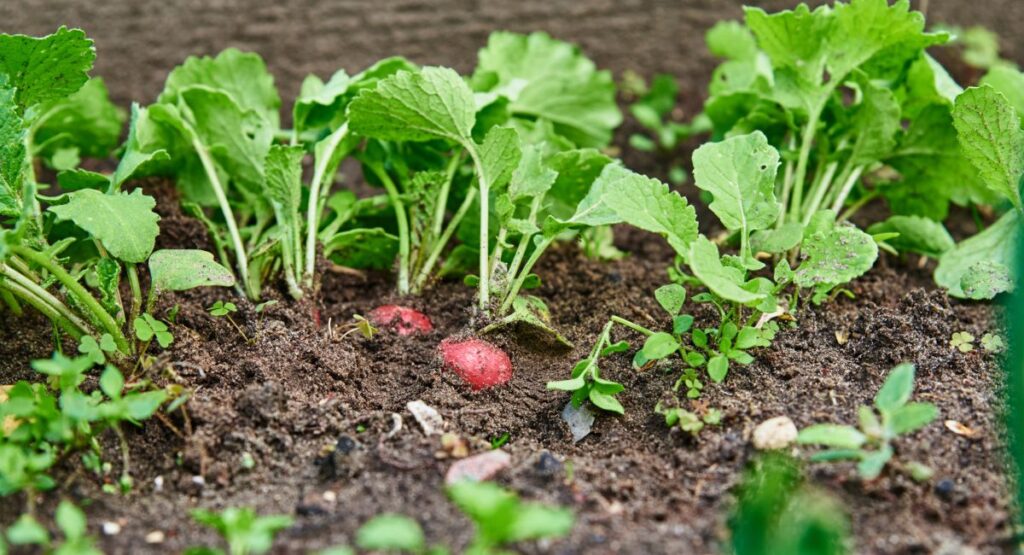
12. Radishes (Raphanus sativus)
The speed demons of vegetable gardens, radishes mature in just 21-30 days. These crunchy roots deliver vitamin C, folate, and potassium while supporting digestion through natural enzymes. Peppery flavor indicates glucosinolates—compounds studied for cancer-protective properties. Perfect for succession planting every two weeks. Greens are edible, nutrient-dense additions to salads.
Primary Vitamins: Vitamin C, Folate, Potassium, Calcium, Fiber, Riboflavin
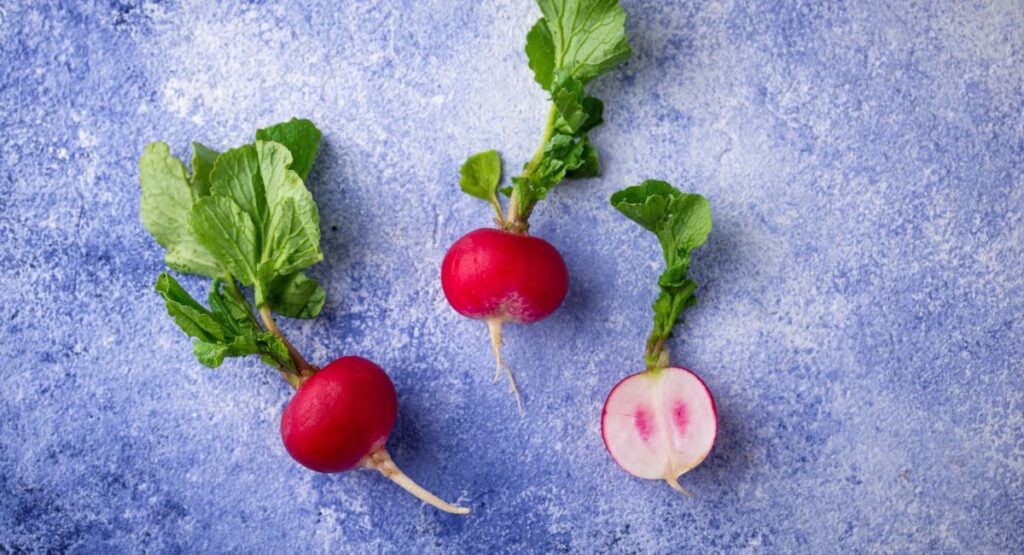
The Fastest Backyard Harvest
Soil & Sunlight: Radishes thrive in loose, well-draining soil with pH 6.0-7.0—heavy clay or rocky soil causes misshapen roots. Full sun ideal, though they tolerate partial shade. Cool-season preference (55-65°F optimal). Minimal fertility needs make them perfect for succession planting and companion planting with slower-growing vegetables. Shallow roots suit shallow containers (6-8 inches deep).
Planting & Harvest Timeline: Direct seed as soon as soil can be worked in spring, continuing every 7-10 days through cool season. Plant seeds ½-inch deep, spacing 1-2 inches apart in rows 6 inches apart. Germination: 4-7 days (fastest of common vegetables). Harvest in just 21-30 days when roots reach 1 inch diameter—timing critical as overmature radishes turn pithy and excessively pungent. Spring varieties bolt in heat; switch to heat-tolerant types for summer planting. Fall planting 4-6 weeks before first frost produces sweetest, mildest roots. Don’t discard greens—they’re nutrient-dense additions to salads and stir-fries.
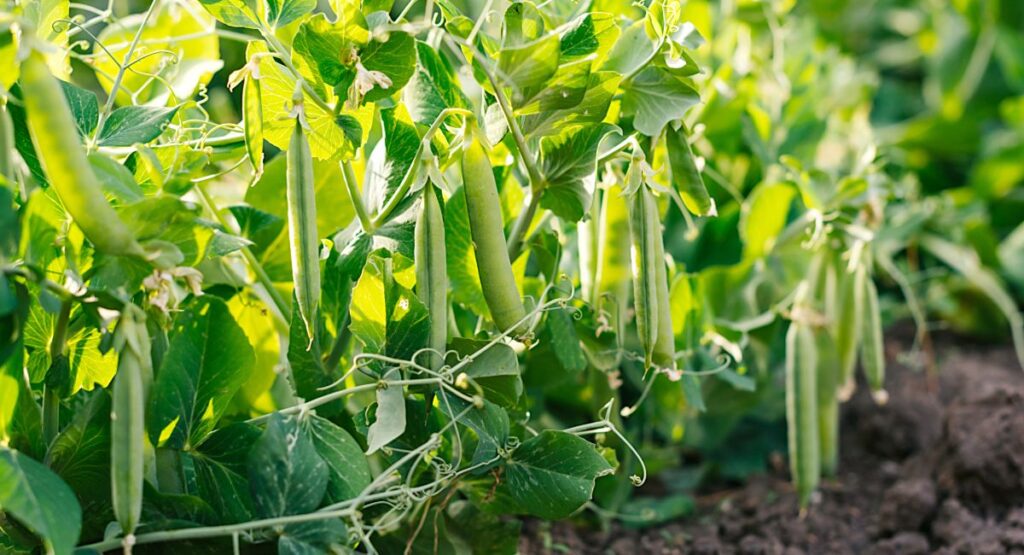
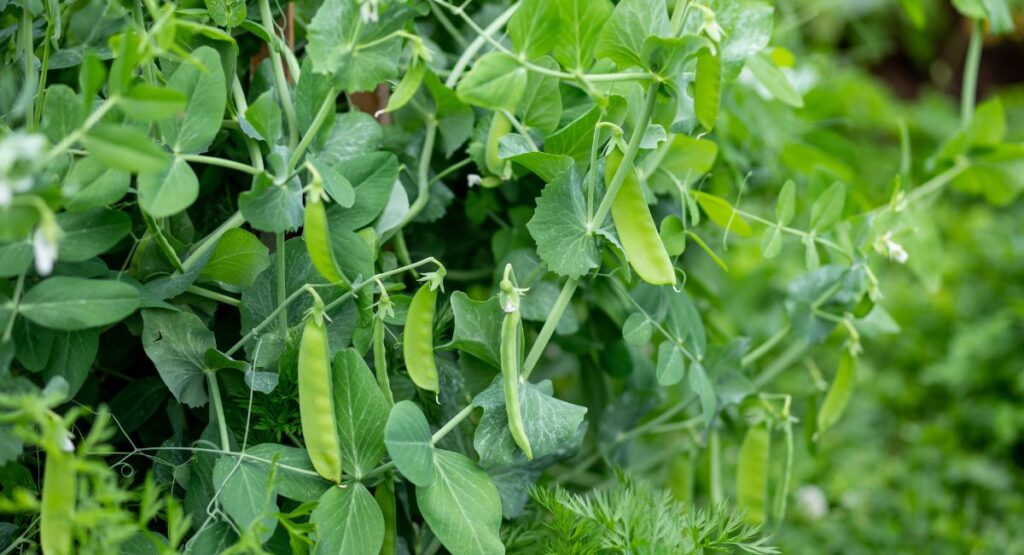
13. Peas (Pisum sativum)
Spring’s sweet treasure, peas deliver protein, vitamin K, and manganese. One cup provides 44% of vitamin K needs and substantial fiber for gut health. Cool-season crops thriving in early spring or fall. Nitrogen-fixing roots improve soil fertility for subsequent plantings. Both pods (sugar snap, snow peas) and shelling varieties offer distinct culinary uses and comparable nutrition.
Primary Vitamins: Vitamin K, Vitamin C, Folate, Manganese, Thiamin, Fiber
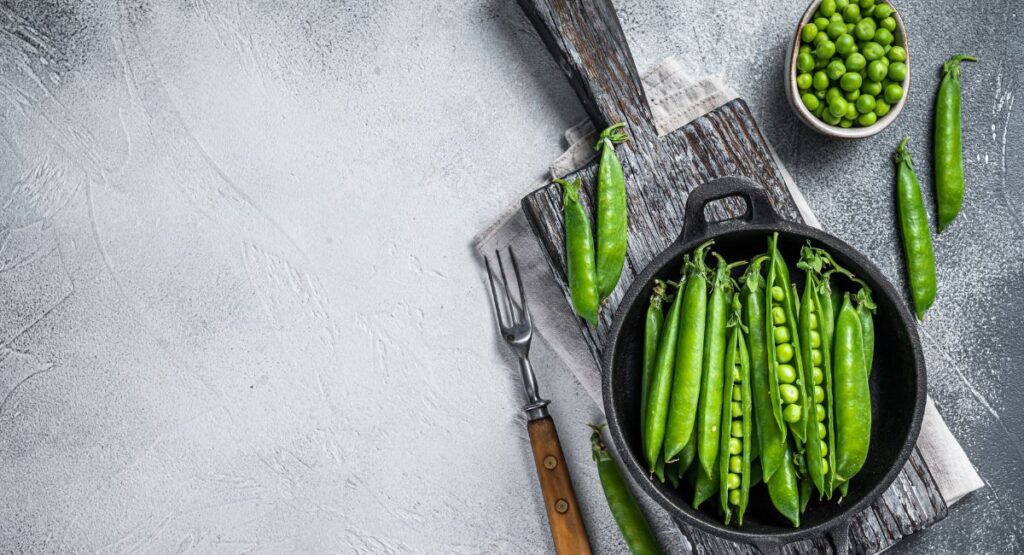
Sweet Spring Nitrogen-Fixers
Soil & Sunlight: Peas grow in well-draining, moderately fertile soil with pH 6.0-7.5. Like beans, they fix atmospheric nitrogen through root nodules, improving soil for subsequent plantings. Full sun ideal; tolerates partial shade. Cool-season crop thriving in 55-65°F temperatures—heat causes poor pod set and premature decline. Support structures essential for climbing varieties; bush types suit containers (12-inch deep minimum).Planting & Harvest Timeline: Direct seed 4-6 weeks before last spring frost when soil reaches 45°F, or plant in fall 8-10 weeks before first frost. Plant seeds 1-2 inches deep, spacing 2 inches apart along support trellises or in rows. Germination: 7-14 days. Install supports at planting—delaying damages tender plants. Harvest begins 60-70 days for snap peas and snow peas (pick when pods are plump but before seeds fully develop), 70-80 days for shelling peas (pick when pods are full and firm). Daily picking encourages continued production. Sugar content highest when picked in morning. Peas stop producing in heat—in warm climates, focus on fall planting for best results
14. Beets (Beta vulgaris)
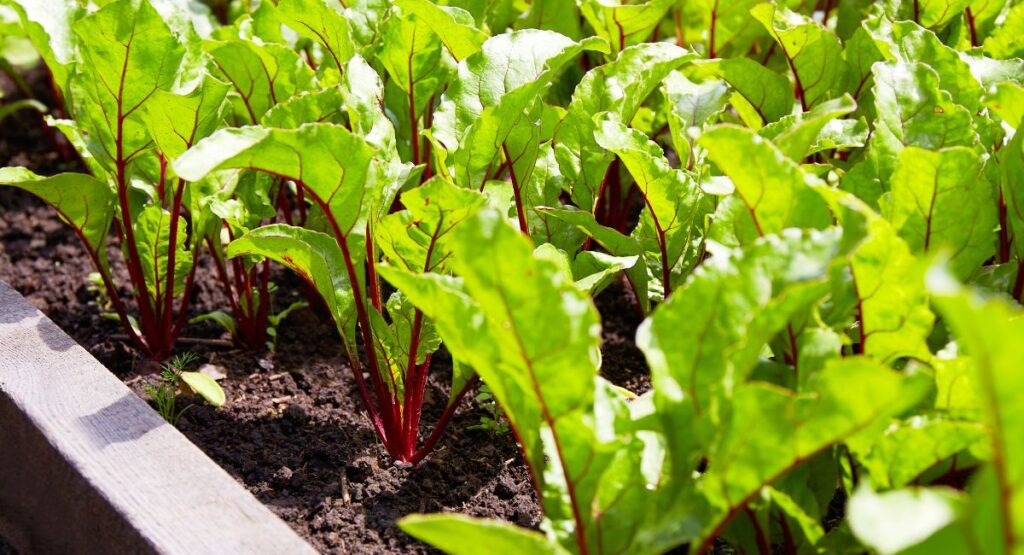
Earthy roots packed with betalains—pigments with antioxidant and anti-inflammatory properties. Beets deliver folate, manganese, and potassium while supporting athletic performance through nitrate-to-nitric oxide conversion, improving blood flow and endurance. Both roots and greens are edible; greens match kale’s vitamin K content. Grows in spring or fall; stores excellently for winter consumption.
Primary Vitamins: Folate, Manganese, Potassium, Iron, Vitamin C, Fiber
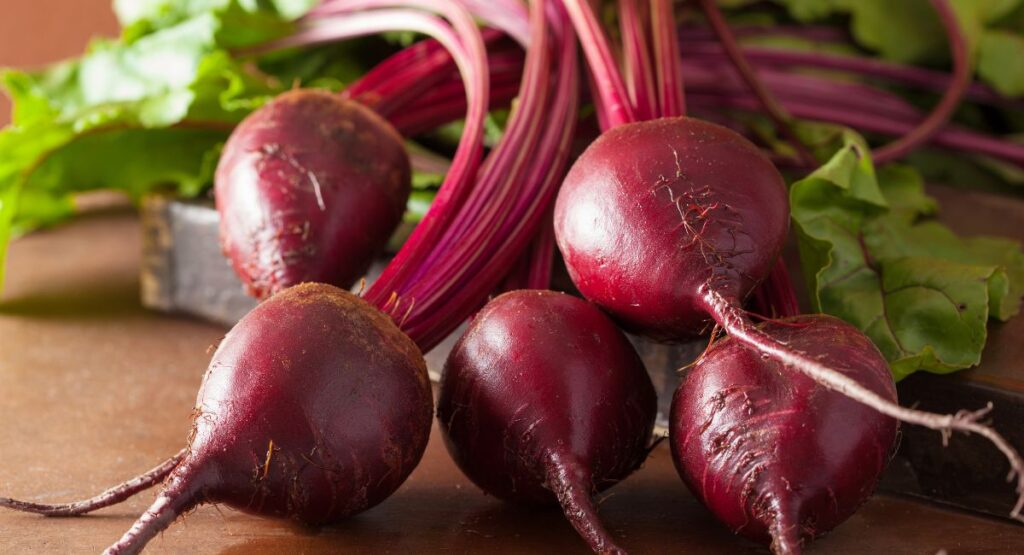
Dual-Purpose Root and Greens
Soil & Sunlight: Beets require loose, well-draining soil free of rocks with pH 6.0-7.5. Heavy clay needs amendment with sand and compost. Full sun (6-8 hours) produces sweetest roots with highest betalain concentration. Consistent moisture prevents woody texture and zoning (internal white rings). Cool-season preference; tolerates light frost. Container cultivation succeeds with 12-inch minimum depth.
Planting & Harvest Timeline: Direct seed 4-6 weeks before last spring frost through early summer for fall harvest. Seeds are multi-germ clusters producing multiple seedlings—thin to 3-4 inches apart when tops reach 2 inches. Plant ½-inch deep in rows 12 inches apart. Germination: 7-14 days at 50-85°F. Begin harvesting greens at 30 days (cut outer leaves, leaving 3-4 for root development). Baby beets harvest at 40-50 days (1-2 inch diameter); mature beets at 50-70 days (2-3 inches). Golf-ball size offers peak tenderness and nutrient-density—larger beets become woody. Light frost sweetens flavor. In mild climates, mulch and harvest through winter. Both roots and greens deliver exceptional nutrition.
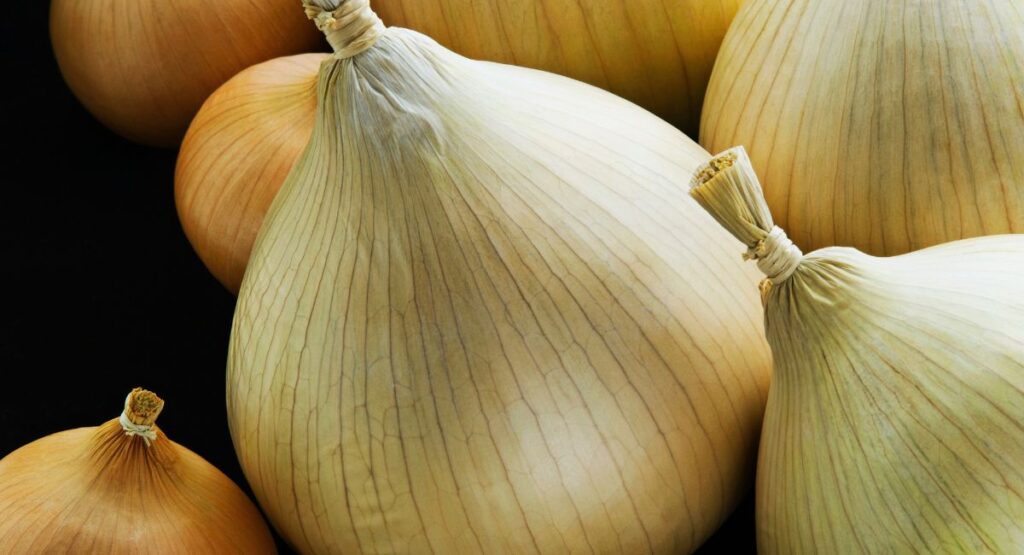
15. Onions (Allium cepa)
Foundational kitchen essential delivering quercetin—a powerful flavonoid with anti-inflammatory and antihistamine properties. Onions provide vitamin C, B vitamins, and sulfur compounds supporting detoxification. Long-day varieties suit northern gardens; short-day thrive in southern climates. Single plants produce large bulbs; green onions harvest in 60 days while bulbing types require 90-120 days maturation.
Primary Vitamins: Vitamin C, Vitamin B6, Folate, Manganese, Quercetin, Sulfur compounds
Essential Allium Foundation
Soil & Sunlight: Onions require fertile, well-draining soil with pH 6.0-7.0 and consistent moisture. Full sun (8+ hours) essential for bulb development. Choose day-length appropriate varieties: long-day for northern gardens (above 36° latitude), short-day for southern gardens, intermediate-day for transition zones. Shallow roots benefit from mulch and regular watering. Container cultivation works with 10-12 inch depth.
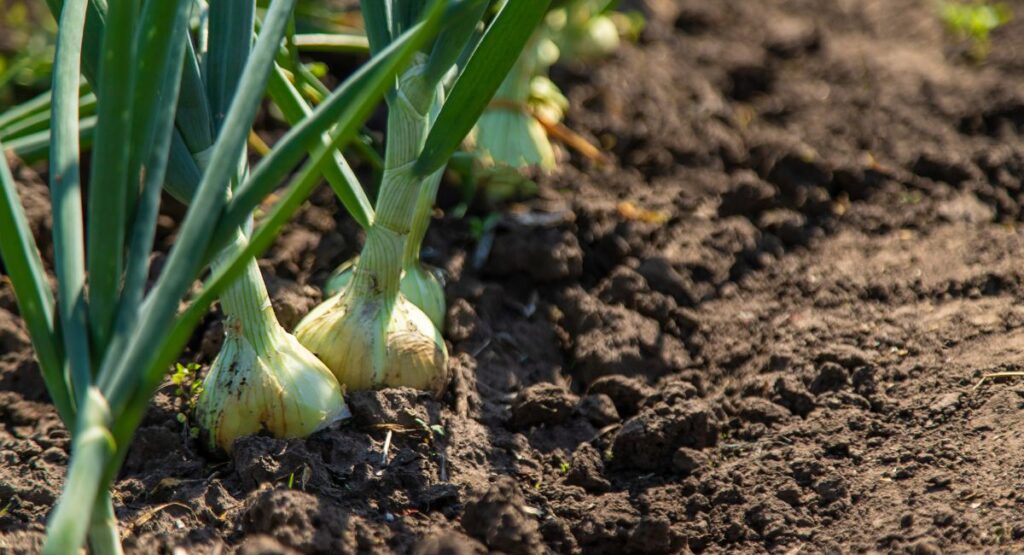
Planting & Harvest Timeline: Plant sets (small bulbs) or transplants in early spring as soon as soil can be worked, or direct seed indoors 8-10 weeks before last frost. Plant sets 1 inch deep, 4-6 inches apart in rows 12 inches apart. Green onions harvest in 60-80 days by pulling entire plant. Bulbing onions require 90-120 days depending on variety. Harvest when 50-75% of tops fall over naturally—don’t wait for all tops to fall. Cure bulbs in warm, dry, ventilated space for 2-3 weeks before storage. Properly cured onions store 6-8 months in cool, dry conditions, providing year-round access to their quercetin and sulfur compounds.
16. Garlic (Allium sativum)
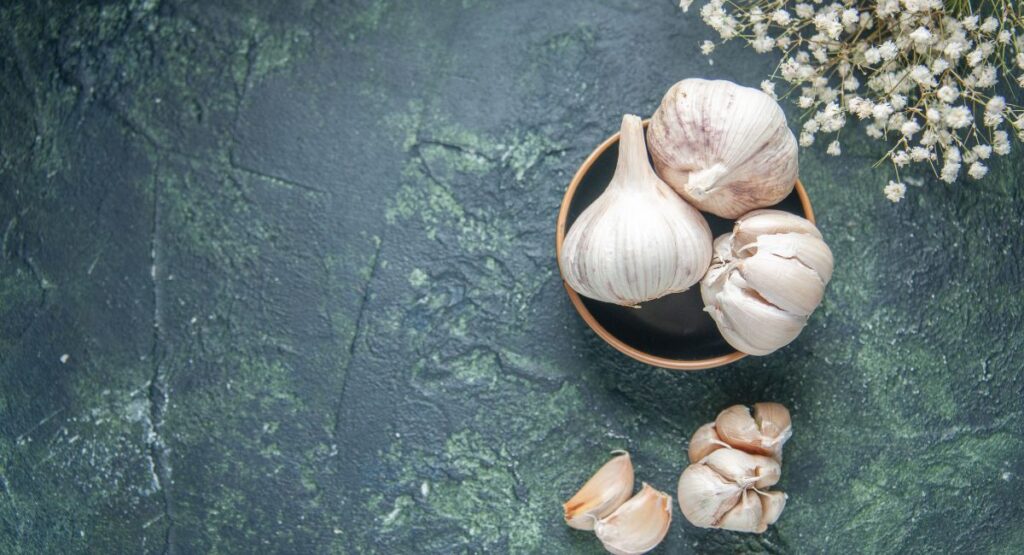
Nature’s antibiotic, garlic contains allicin—a sulfur compound with potent antimicrobial, antiviral, and heart-protective properties. Rich in manganese, vitamin B6, and selenium. Plant in fall for summer harvest; one clove produces an entire bulb. Hardneck varieties produce edible scapes in spring. Supports immune function, cardiovascular health, and may reduce blood pressure and cholesterol levels.
Primary Vitamins: Manganese, Vitamin B6, Vitamin C, Selenium, Allicin, Fiber
Nature’s Antibiotic Medicine
Soil & Sunlight: Garlic demands well-draining, fertile soil with pH 6.0-7.0 and full sun (8+ hours). Excellent drainage critical—waterlogged soil causes rot. Amend with compost and balanced organic fertilizer before planting. Long growing season (8-9 months) rewards patience with exceptional allicin-rich bulbs. Container cultivation possible with 12-inch minimum depth, though in-ground planting produces larger bulbs.
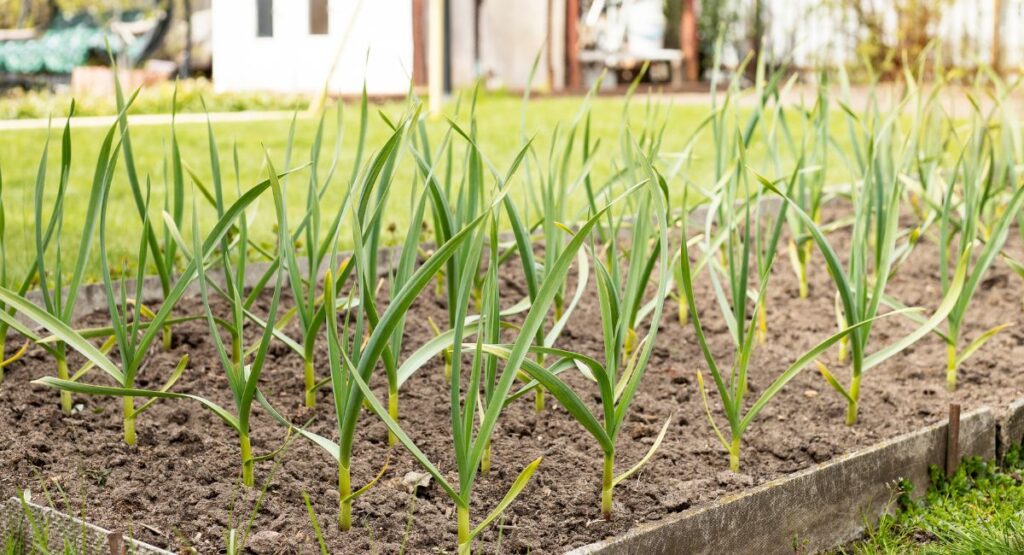
Planting & Harvest Timeline: Plant cloves in fall 4-6 weeks before ground freezes (October-November in most zones), or early spring in cold climates. Separate bulbs into individual cloves, plant pointed end up, 2 inches deep, 6 inches apart. Mulch heavily after ground freezes to prevent heaving. Hardneck varieties produce edible scapes in late spring—harvest when curled for culinary use and to redirect energy to bulb development. Harvest when lower 5-6 leaves turn brown but upper leaves remain green (typically June-July), approximately 240-270 days after fall planting. Cure in warm, dry, ventilated space for 2-3 weeks. Properly stored garlic lasts 6-10 months, providing year-round access to its antimicrobial compounds.
17. Summer Squash (Cucurbita pepo)
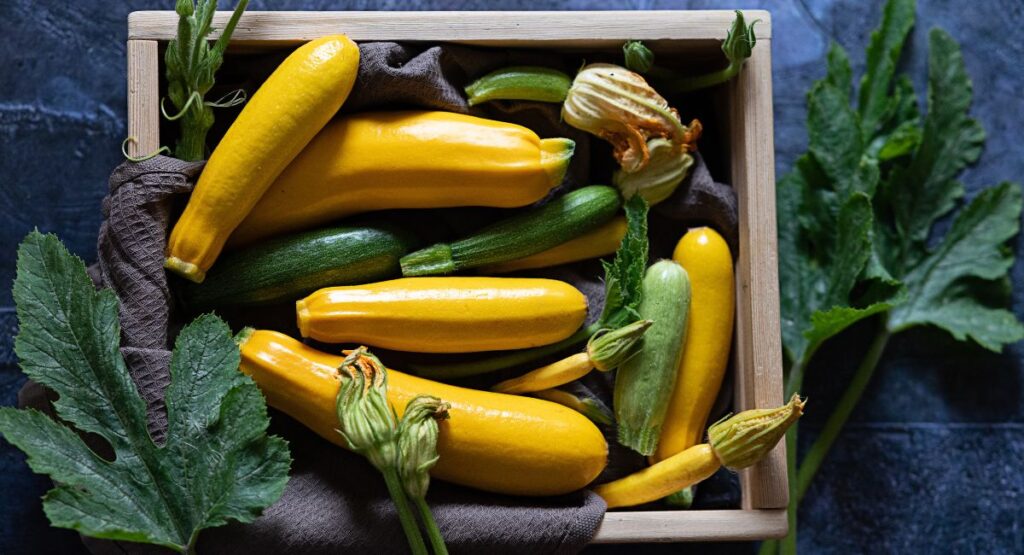
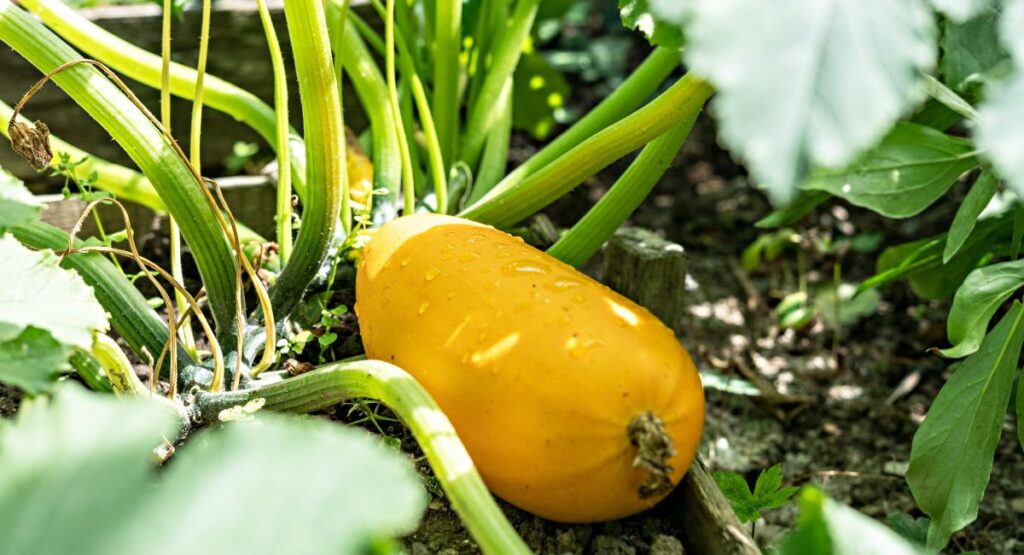
Beyond zucchini, yellow crookneck and pattypan varieties deliver similar manganese, vitamin C, and carotenoids. Low-calorie, high-water content vegetables supporting hydration and providing antioxidant protection. Prolific producers—harvest when 4-6 inches for peak tenderness and flavor. Male flowers can be harvested for stuffing without affecting fruit production since only female flowers produce squash.
Primary Vitamins: Manganese, Vitamin C, Vitamin A, Potassium, Magnesium, Folate
Diverse Warm-Season Producers
Soil & Sunlight: Like zucchini, summer squash varieties (yellow crookneck, pattypan) thrive in rich, well-draining organic soil with pH 6.0-7.5 and full sun (8+ hours). Heavy feeders requiring generous compost or aged manure. Warm soil essential: minimum 60°F for germination. Plants spread 3-4 feet; space accordingly. Container gardening requires 24-inch diameter, 18-inch deep pots.
Planting & Harvest Timeline: Direct seed after last frost when soil reaches 70°F, or start indoors 2-3 weeks earlier in peat pots. Plant seeds 1 inch deep, 3-4 feet apart. Germination: 7-10 days. First harvest begins at 45-55 days. Pick yellow squash at 4-6 inches, pattypan at 2-4 inches diameter for peak tenderness and flavor. Daily checking essential—overlooked fruits become woody and suppress flowering. Flowers are edible; harvest male flowers (those without fruit behind bloom) for stuffing without affecting production. Hand-pollination may be necessary if bee activity is low. Single plants produce 6-10 pounds weekly through summer with consistent harvesting.
18. Eggplant (Solanum melongena)
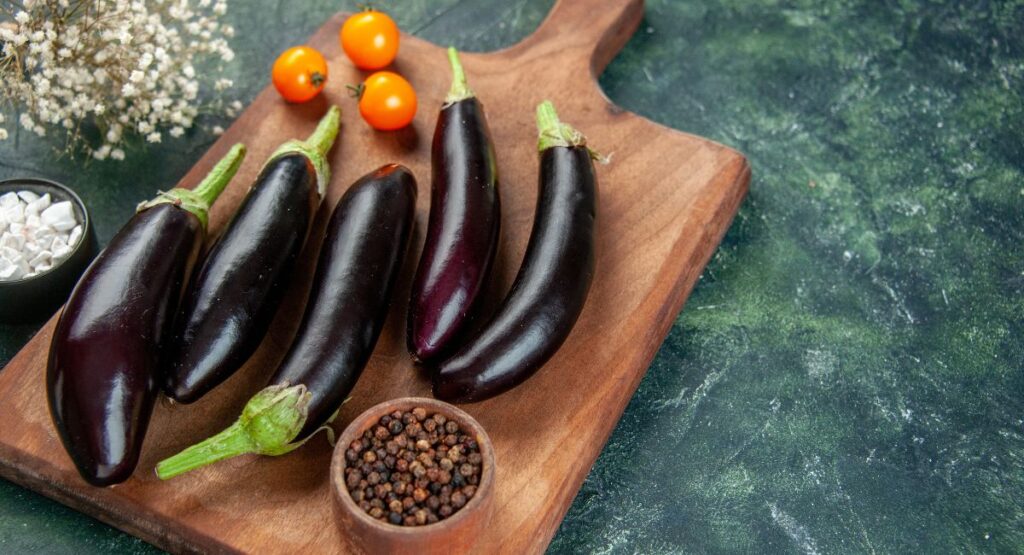
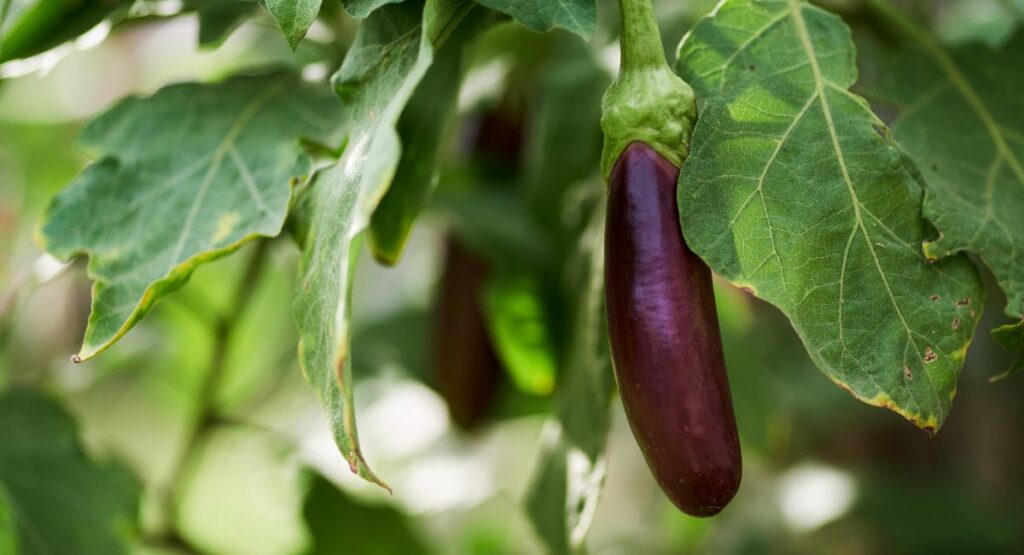
Purple beauties rich in nasunin—a potent antioxidant in the skin protecting cell membranes and brain tissue from free radical damage. Delivers fiber, potassium, and manganese. Warm-season crop requiring full sun and consistent moisture. Harvest when skin is glossy; dull appearance indicates over-maturity. Compact varieties like ‘Fairy Tale’ suit containers; traditional globe types produce 4-6 fruits per plant.
Primary Vitamins: Fiber, Manganese, Potassium, Folate, Vitamin K, Vitamin C
Heat-Loving Nasunin Source
Soil & Sunlight: Eggplant requires rich, well-draining organic soil with pH 5.5-6.8 and full sun (8+ hours). Extremely heat-loving—more so than tomatoes or peppers. Soil must reach 70°F for transplanting; optimal growing temperature 70-85°F. Consistent moisture prevents bitterness and blossom end rot. Mulch conserves moisture and warms soil. Container varieties (like Fairy Tale) thrive in 5-gallon pots; standard types need more space.
Planting & Harvest Timeline: Start seeds indoors 8-10 weeks before last frost, maintaining 80-85°F soil temperature for germination (warmth critical). Transplant only after all frost danger passes and nighttime temperatures stay above 55°F. Space 24-30 inches apart; stake or cage to support heavy fruits. First harvest begins 70-90 days from transplanting. Harvest when skin is glossy and firm—dull appearance indicates over-maturity and declining nasunin content. Cut (don’t pull) fruits using pruners, leaving 1-inch stem attached. Regular harvesting encourages continued production through summer. Compact varieties produce 4-6 fruits; standard plants yield 8-12.
19. Brussels Sprouts (Brassica oleracea var. gemmifera)
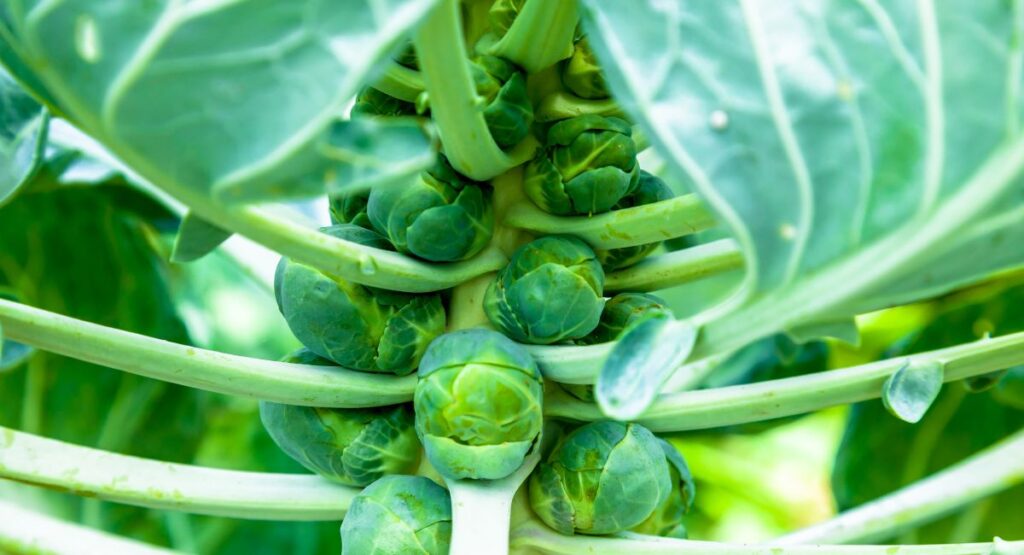
Miniature cabbages delivering concentrated nutrition—one cup provides 195% of daily vitamin K and 129% of vitamin C needs. Contains glucosinolates supporting detoxification pathways. Cool-season crop improving with frost exposure. Harvest bottom sprouts first as they mature from base upward; plants produce for months. Space-efficient vertical growth suits smaller gardens, yielding 50+ sprouts per plant.
Primary Vitamins: Vitamin K, Vitamin C, Folate, Manganese, Vitamin B6, Fiber
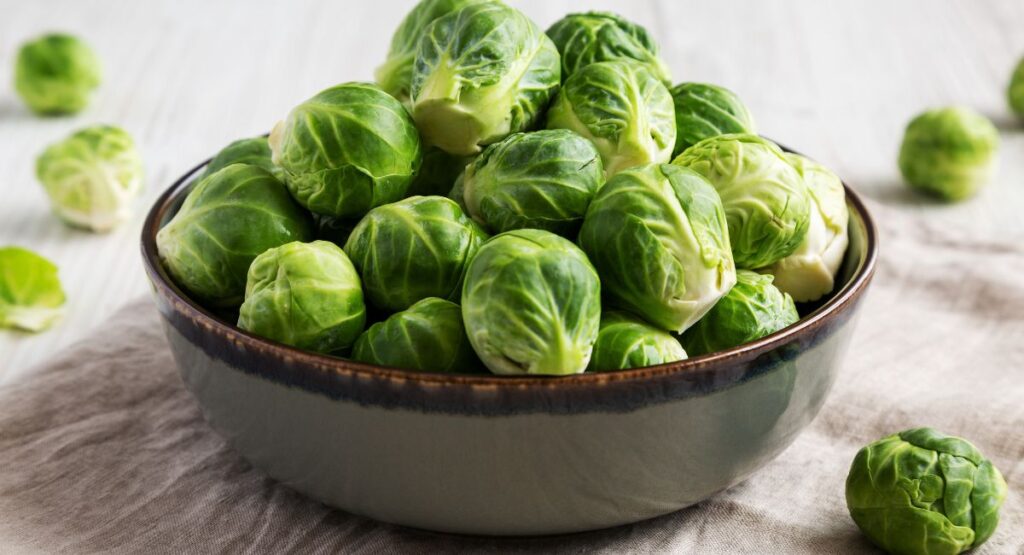
Patient Grower’s Reward
Soil & Sunlight: Brussels sprouts require fertile, well-draining soil with pH 6.0-7.5 and full sun (6-8 hours). Cool-season crop preferring temperatures 60-70°F. Heavy feeders benefiting from compost and balanced organic fertilizer. Vertical growth makes them space-efficient. Strong root systems need deep soil or large containers (18-inch minimum depth and width).
Planting & Harvest Timeline: Start seeds indoors 12-14 weeks before first fall frost, or direct seed for spring harvest in mild climates. Transplant seedlings when 5-7 inches tall, spacing 24 inches apart. Germination: 7-14 days. Long growing season (90-180 days) requires patience. Sprouts develop from bottom up over several weeks. Begin harvesting lowest sprouts when firm and 1 inch diameter (approximately 90-110 days). Twist or cut sprouts from stem, working upward as they mature. Remove lower leaves below harvested sprouts to encourage upper development. Light frost (28-32°F) significantly improves flavor by converting starches to sugars—don’t harvest until after frost exposure. Single plants yield 50-100 sprouts over extended fall/winter harvest.
20. Arugula (Eruca vesicaria)
Peppery salad green with exceptional calcium, vitamin K, and folate content. This fast-growing brassica matures in 30-40 days with spicy flavor intensifying in warm weather. Cut-and-come-again harvesting extends production for weeks. Contains glucosinolates studied for cancer-protective properties. Grows easily in containers; succession plant every two weeks for continuous supply. Baby leaves offer milder flavor for raw consumption.
Primary Vitamins: Vitamin K, Calcium, Folate, Vitamin A, Vitamin C, Magnesium
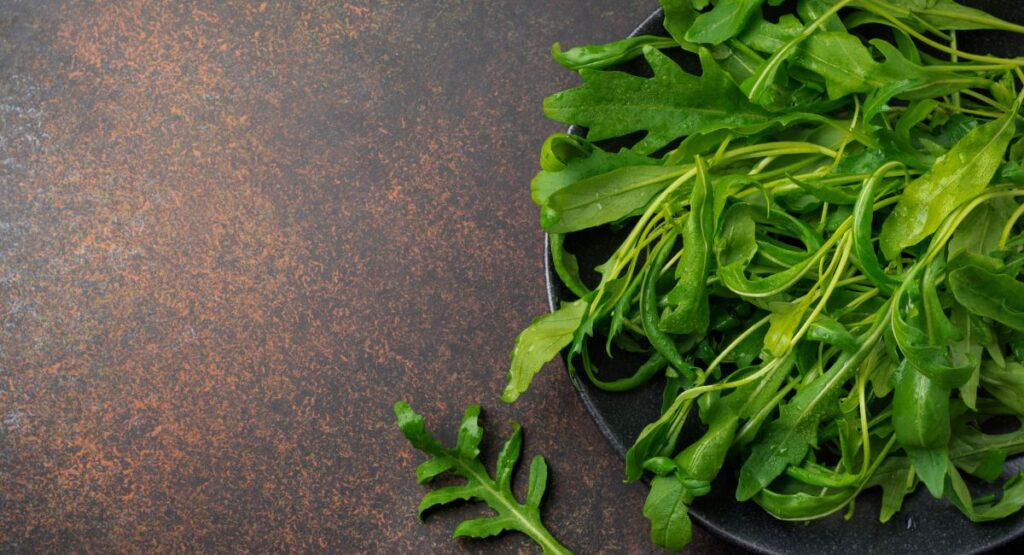
Peppery Quick-Growing Greens
Soil & Sunlight: Arugula grows in moderately fertile, well-draining soil with pH 6.0-7.0. Cool-season preference means it tolerates partial shade, especially beneficial in warm climates where afternoon shade slows bolting. Consistent moisture prevents excessive peppery bite. Shallow roots make it ideal for containers (6-8 inch depth) and window boxes.
Planting & Harvest Timeline: Direct seed in early spring as soon as soil can be worked, continuing every 2-3 weeks through cool season. Plant seeds ¼-inch deep, spacing 1 inch apart in rows 12 inches apart. Germination: 7-10 days at 40-55°F (germinates in cooler soil than most vegetables). Begin harvesting outer leaves at 30-40 days when plants reach 4-6 inches tall. Baby leaves (2-3 inches) offer milder flavor ideal for raw consumption. Cut-and-come-again method extends harvest for weeks. Heat above 75°F triggers rapid bolting and intensely peppery (nearly bitter) flavor—harvest entire plants before flower stalks form. Fall planting provides sweetest, most tender leaves. Self-seeds readily; allow one or two plants to flower for next season’s volunteer crop.
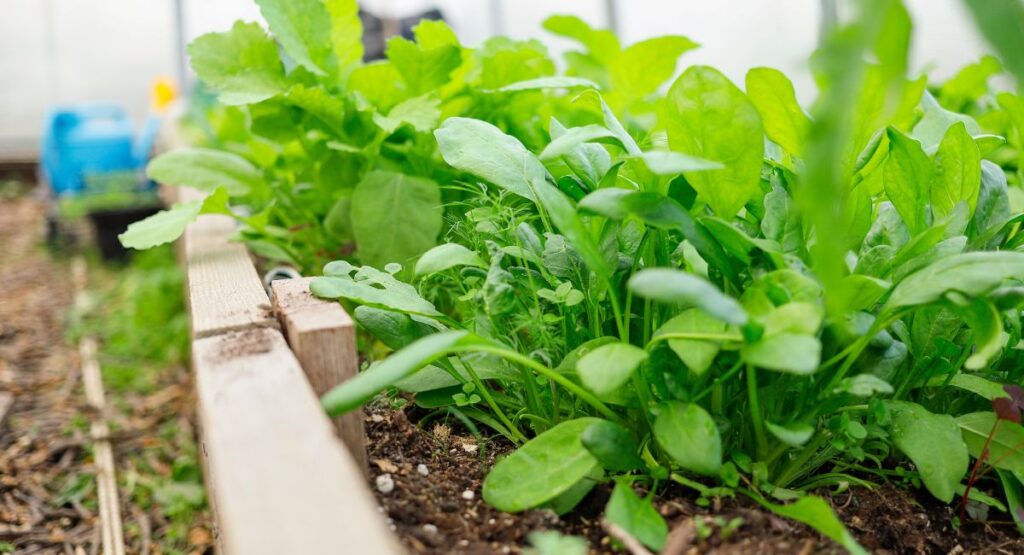
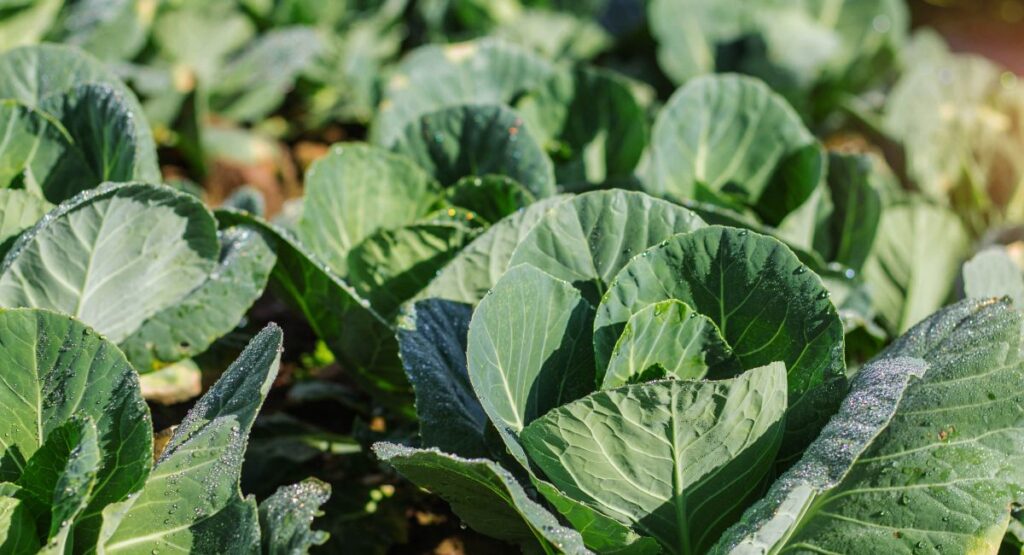
21. Cabbage (Brassica oleracea var. capitata)
Dense cruciferous heads delivering vitamin C, vitamin K, and beneficial plant compounds. One cup provides 85% of daily vitamin C needs. Cool-season crop forming tight heads over 70-90 days. Contains sulforaphane and glucosinolates studied for anti-cancer properties. Stores exceptionally well—properly stored heads last months in root cellars. Green, red, and savoy varieties offer nutritional equivalency with distinct flavors.
Primary Vitamins: Vitamin C, Vitamin K, Folate, Manganese, Vitamin B6, Fiber
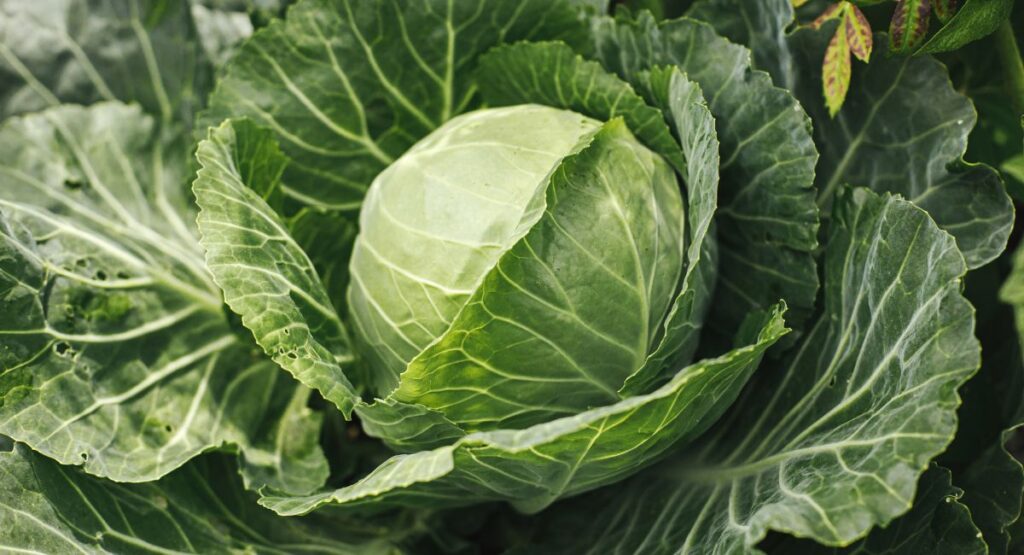
Dense Cool-Season Storage Crop
Soil & Sunlight: Cabbage requires fertile, well-draining soil with pH 6.0-7.5 and consistent moisture. Full sun (6-8 hours) essential for tight head formation. Cool-season crop thriving in 60-70°F temperatures. Heavy feeder requiring compost and balanced organic fertilizer. Deep roots prefer in-ground cultivation but container growing succeeds with 18-inch minimum depth.
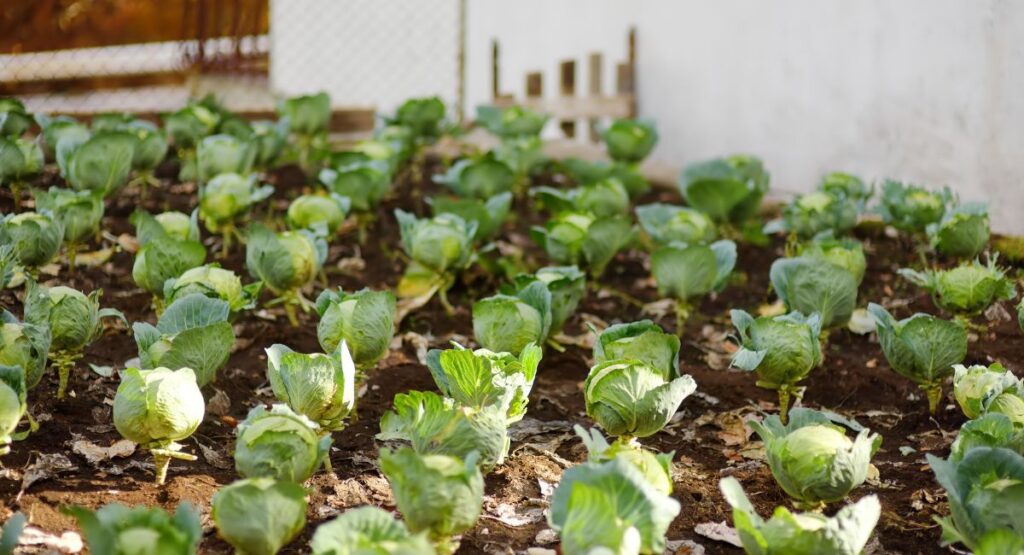
Planting & Harvest Timeline: Start seeds indoors 6-8 weeks before last spring frost, or direct seed for fall harvest 12-14 weeks before first frost. Transplant seedlings when 4-6 inches tall, spacing 18-24 inches apart. Germination: 7-14 days. Early varieties harvest at 60-70 days; storage varieties require 90-110 days. Harvest when heads feel firm and solid—squeeze gently to test. Cut heads at soil level, leaving roots and outer leaves in place; small secondary heads may develop. Spring cabbage tends toward smaller heads; fall cabbage produces larger, denser heads with better storage qualities. Light frost improves flavor and increases vitamin C. Properly stored heads last 3-5 months in cool (32-40°F), humid conditions.
22. Asparagus (Asparagus officinalis)
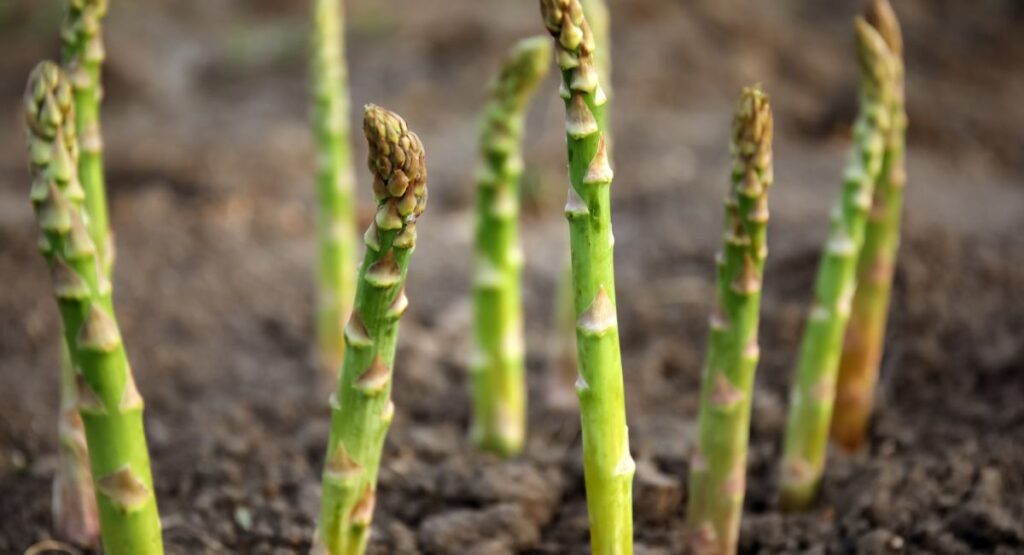
Perennial investment delivering 15-20 years of spring harvests. Spears emerge loaded with folate—one cup provides 67% of daily needs—plus vitamins K, A, C, and E. Contains prebiotic fiber feeding beneficial gut bacteria. Plant crowns once; harvest lightly in year two, fully from year three onward. Fern-like foliage feeds root systems for next year’s production. Excellent ROI for permanent garden beds.
Primary Vitamins: Folate, Vitamin K, Vitamin A, Vitamin C, Vitamin E, Fiber
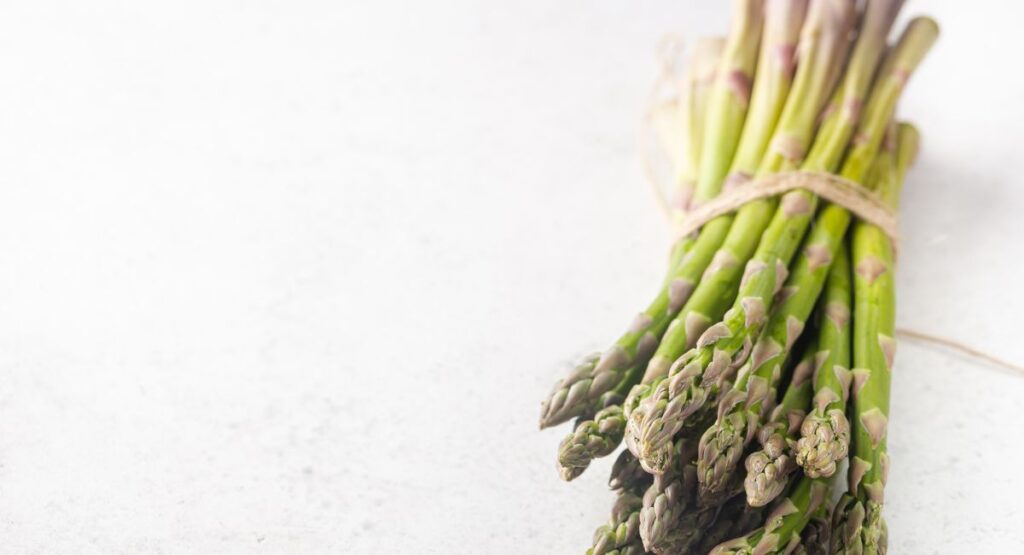
Perennial Spring Investment
Soil & Sunlight: Asparagus demands well-draining, fertile soil with pH 6.5-7.5 and full sun (8+ hours). Perennial nature requires permanent bed location with excellent drainage—waterlogged conditions cause crown rot. Deep roots (8-10 feet) mean raised beds or trench planting works best. Amend soil generously with compost and aged manure before planting. Not suited for containers due to extensive root system.
Planting & Harvest Timeline: Plant crowns (1-2 year old roots) in early spring as soon as soil can be worked, or start from seed (adds 1-2 years to first harvest). Dig trenches 12 inches deep, 18 inches wide. Space crowns 18 inches apart with roots spread radially. Cover with 2-3 inches soil, gradually filling trench as spears emerge. Critical: DO NOT harvest year one. Harvest lightly (2-3 weeks) in year two. Full harvest (6-8 weeks) begins year three. Spears reach harvest size (6-10 inches) when approximately pencil thickness. Cut or snap at soil level when tips are still tight. Daily harvesting during peak production essential. Allow ferns to grow after harvest season—they photosynthesize and store energy for next year’s spears. Established beds produce 15-25 years with proper care.
23. Collard Greens (Brassica oleracea var. viridis)
Southern staple delivering exceptional vitamin K, calcium, and vitamin A. One cup cooked provides 1,045% of daily vitamin K needs—critical for bone health and blood clotting. Heat-tolerant unlike most brassicas, thriving through summer. Young leaves harvested continuously; older leaves develop deeper flavor perfect for braising. Supports cardiovascular health, bone density, and anti-inflammatory pathways through glucosinolate compounds.
Primary Vitamins: Vitamin K, Vitamin A, Vitamin C, Calcium, Folate, Manganese
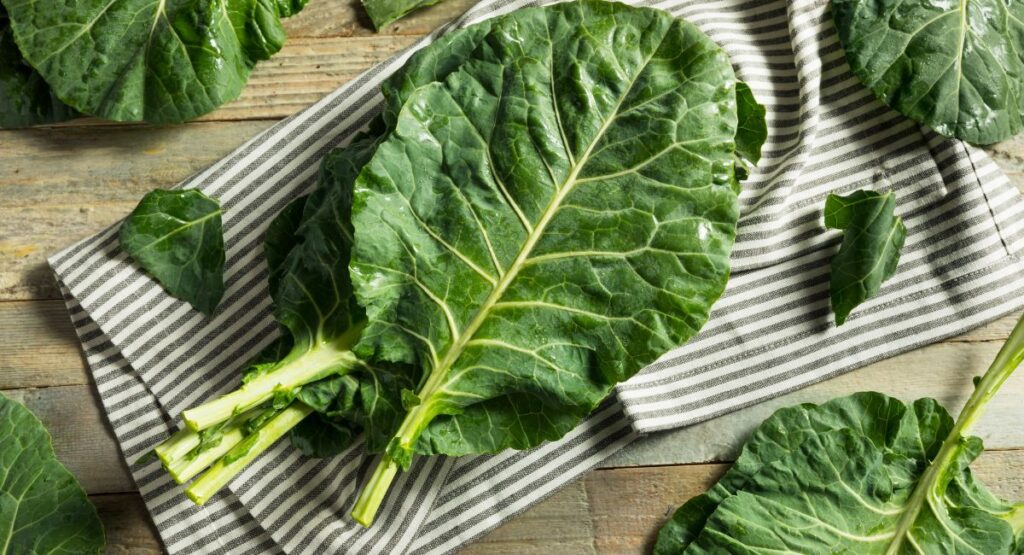
Heat-Tolerant Southern Staple
Soil & Sunlight: Collard greens grow in fertile, well-draining soil with pH 6.0-7.5. Full sun (6-8 hours) ideal, though they tolerate partial shade. Heat-tolerant unlike most brassicas, thriving through southern summers when other greens fail. Consistent moisture prevents tough, bitter leaves. Deep roots (12+ inches) prefer in-ground cultivation but adapt to large containers (16-inch minimum depth).
Planting & Harvest Timeline: Direct seed or transplant in early spring through late summer for extended harvest. Plant seeds ½-inch deep, spacing 18-24 inches apart (closer spacing for baby greens). Germination: 7-14 days at 45-85°F (wide temperature tolerance). Begin harvesting lower leaves at 40-50 days when plants reach 12 inches tall. Cut-and-come-again method provides continuous harvest—always leave 3-4 upper leaves for continued growth. Young leaves (6-8 inches) offer tender texture for raw consumption; mature leaves (10-12 inches) develop deeper flavor perfect for braising. Light frost sweetens flavor dramatically; plants tolerate temperatures to 20°F with protection. In mild climates, harvest through winter. Single plants can produce for 6-12 months with proper care.
24. Sweet Potatoes (Ipomoea batatas)
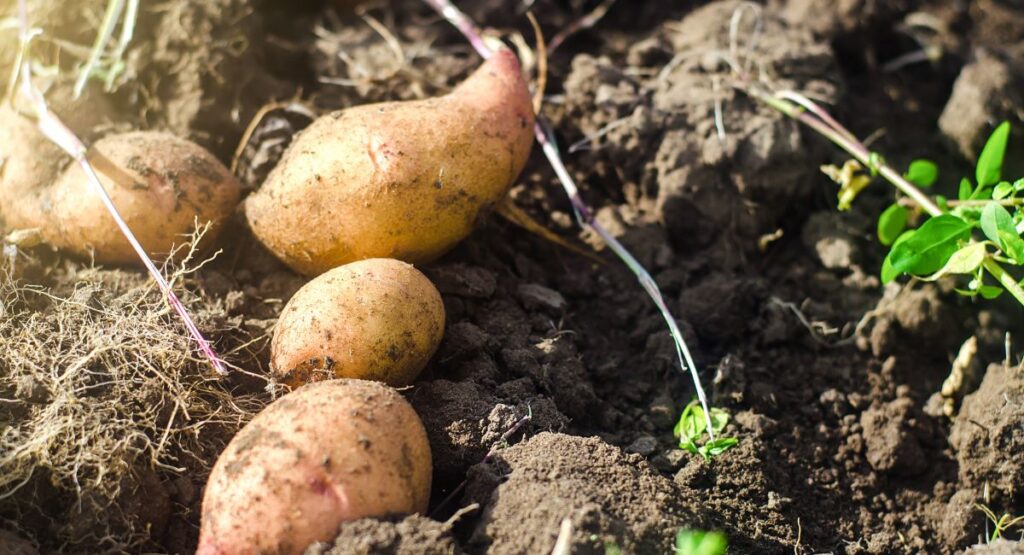
Nutritional powerhouses delivering extraordinary beta-carotene—one medium sweet potato provides 438% of daily vitamin A needs. Rich in fiber, potassium, and vitamins B6 and C. Warm-season vining plants requiring 90-120 days and loose, well-drained soil. Plant slips (rooted cuttings) in late spring. Leaves are edible, nutrient-dense greens. Stores for months in cool, dry conditions. Purple varieties contain anthocyanins with additional antioxidant properties.
Primary Vitamins: Vitamin A (beta-carotene), Vitamin C, Manganese, Vitamin B6, Potassium, Fiber
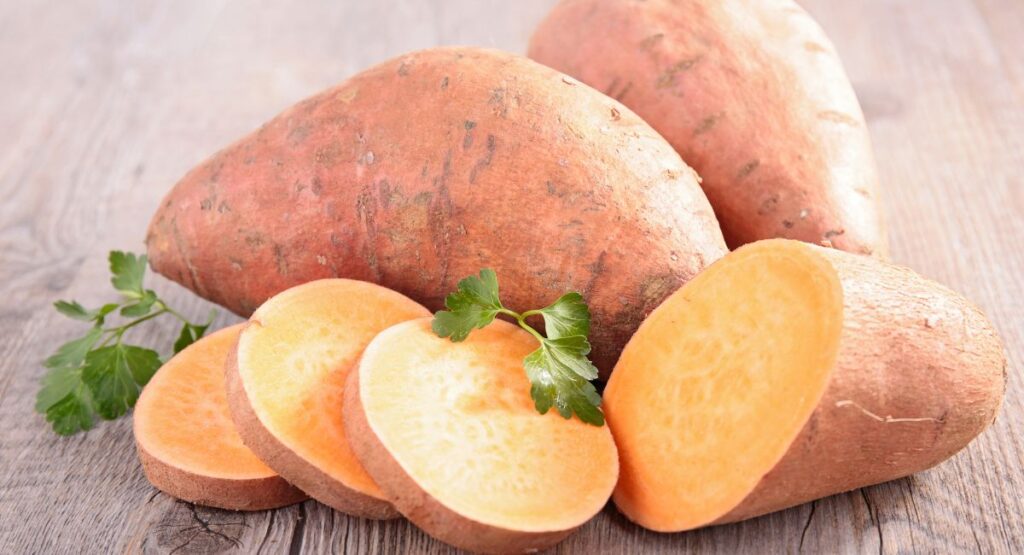
Long-Season Root Treasure
Soil & Sunlight: Sweet potatoes require loose, well-draining sandy soil with pH 5.5-6.5. Heavy clay or compacted soil produces misshapen roots. Full sun (8+ hours) essential. Warm-season crop demanding soil temperature minimum 70°F for slip planting and sustained 75-85°F for root development. Raised beds or ridged rows improve drainage and warm soil. Vining growth requires space (8-10 feet per plant) or strong vertical support. Container cultivation challenging due to space needs.
Planting & Harvest Timeline: Plant slips (rooted cuttings from sprouted tubers) 3-4 weeks after last frost when soil reaches 70°F. Space slips 12-18 inches apart in rows 3 feet apart. Vines spread extensively; redirect periodically to prevent rooting at nodes (reduces root size). Long growing season: 90-120 days minimum, 120-150 days for largest tubers. Harvest before first frost when soil is dry for easier digging and reduced damage. Cut vines at soil level, then carefully dig with garden fork, working 12 inches from plant center. Handle gently—bruised tubers rot in storage. Cure at 85°F with 90% humidity for 7-10 days to heal wounds and convert starches to sugars, then store at 55-60°F. Properly cured sweet potatoes last 6-10 months, providing year-round beta-carotene and complex carbohydrates.
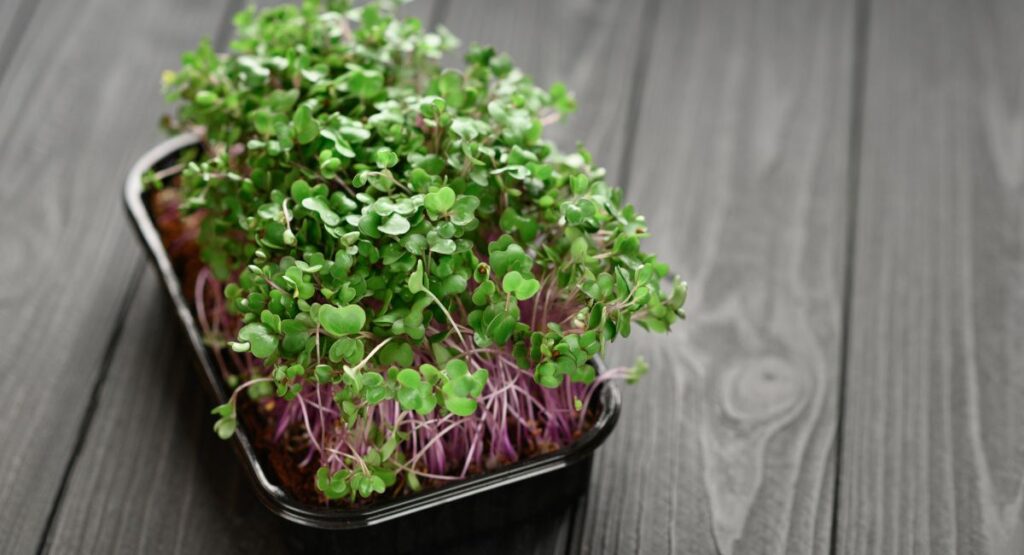
25. Microgreens (Various Species)
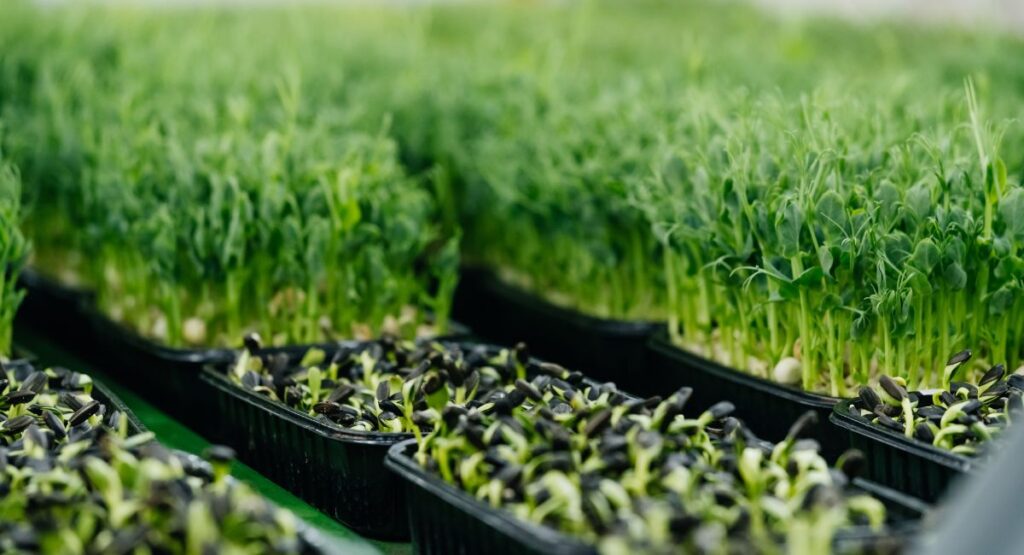
Concentrated nutrition harvested at 7-14 days when first true leaves appear. Studies show microgreens contain 4-40 times more vitamins and antioxidants than mature plants. Varieties include broccoli, kale, radish, and sunflower. Grow indoors year-round on windowsills in shallow trays. Space-efficient, rapid turnover—one tray yields multiple harvests weekly. Perfect for urban gardeners with limited space seeking maximum nutrient density per square inch.
Primary Vitamins: Varies by species—typically Vitamin C, Vitamin K, Vitamin E, Beta-carotene, concentrated antioxidants
Intensive Year-Round Nutrition
Soil & Sunlight: Microgreens grow in shallow trays (1-2 inches) filled with seed-starting mix or fine potting soil. Indoor cultivation on sunny windowsills (4-6 hours) or under grow lights (12-16 hours). Outdoor growing possible in shade. Consistent moisture critical but avoid waterlogging—bottom watering prevents damping-off disease. Year-round production makes them perfect for urban gardeners with limited space.
Planting & Harvest Timeline: Broadcast seeds densely across pre-moistened soil, pressing gently into surface. Cover with thin soil layer or leave exposed (varies by species). Mist daily until germination (2-5 days), then water from below. Popular varieties include broccoli, kale, radish, arugula, sunflower, and peas. Harvest at 7-21 days when first true leaves appear—timing varies by species but always before 3-inch height. Cut just above soil line using sharp scissors. Nutrient density peaks at this growth stage, delivering 4-40 times more vitamins than mature plants by weight. Single trays yield 4-8 ounces per square foot. Succession planting (starting new trays every 3-5 days) provides continuous harvest. Most cost-effective, space-efficient method for concentrated nutrition, ideal for smoothies, salads, and garnishes.
Quick Reference: Backyard-Vegetable-Garden-to-Primary Vitamin Guide
Use this comprehensive table to plan your backyard pharmacy based on specific nutritional goals. Each vegetable excels in particular vitamin categories, allowing strategic garden design for targeted health outcomes.
| Vegetable | Primary Vitamins & Minerals |
| Tomatoes | Vitamin C, Vitamin K1, Vitamin A, Lycopene |
| Kale | Vitamin K, Vitamin A, Vitamin C, Calcium |
| Spinach | Iron, Folate, Vitamin K1, Magnesium |
| Bell Peppers | Vitamin C, Vitamin A, Vitamin B6 |
| Carrots | Vitamin A (beta-carotene), Vitamin K1, Biotin |
| Zucchini | Manganese, Vitamin C, Potassium |
| Lettuce | Vitamin K, Vitamin A, Folate, Iron |
| Broccoli | Vitamin C, Vitamin K, Folate, Chromium |
| Swiss Chard | Vitamin K, Magnesium, Vitamin A |
| Green Beans | Folate, Vitamin K, Vitamin C, Manganese |
| Cucumbers | Vitamin K, Potassium, Vitamin C |
| Radishes | Vitamin C, Folate, Potassium |
| Peas | Vitamin K, Vitamin C, Folate, Manganese |
| Beets | Folate, Manganese, Potassium, Iron |
| Onions | Vitamin C, Vitamin B6, Quercetin |
| Garlic | Manganese, Vitamin B6, Allicin, Selenium |
| Summer Squash | Manganese, Vitamin C, Vitamin A |
| Eggplant | Fiber, Manganese, Potassium, Nasunin |
| Brussels Sprouts | Vitamin K, Vitamin C, Folate |
| Arugula | Vitamin K, Calcium, Folate, Vitamin A |
| Cabbage | Vitamin C, Vitamin K, Folate, Manganese |
| Asparagus | Folate, Vitamin K, Vitamin A, Vitamin C |
| Collard Greens | Vitamin K, Vitamin A, Calcium |
| Sweet Potatoes | Vitamin A (beta-carotene), Vitamin C, Manganese |
| Microgreens | Vitamin C, Vitamin K, Vitamin E, Concentrated antioxidants |
Conclusion: From Soil to Wellness—Your Journey Begins
The transformation of a simple backyard into a natural pharmacy isn’t just about plants—it’s about reclaiming autonomy over health, reconnecting with ancestral wisdom, and building resilience in uncertain times. These 25 vegetables represent more than food; they’re concentrated medicine grown in harmony with soil health, harvested at peak nutrition, and consumed with intention.
As you cultivate tomatoes bursting with lycopene, kale loaded with vitamin K, and carrots dense with beta-carotene, you’re participating in sustainable agriculture’s most intimate form. You’re reducing food miles to zero, eliminating plastic waste, and ensuring organic yield through your own practices. Each seed planted is an investment in preventive health care that compounds over seasons.
The path forward is clear: start small, perhaps with five kitchen essentials from this guide. Master those, then expand your natural pharmacy as confidence grows. Within a single growing season, you’ll witness the profound connection between soil health and human vitality. Your body will respond to nutrient-density that store-bought produce simply cannot match.
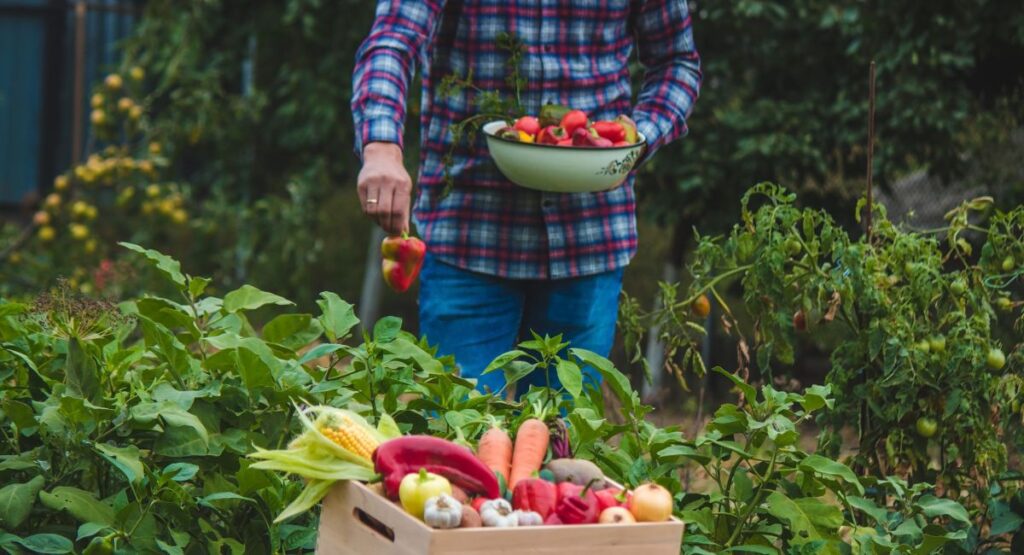
Remember that every tomato vine, every kale leaf, every carrot root represents a choice—a choice for health sovereignty, environmental stewardship, and the simple joy of eating food that tastes like sunshine and soil. Your backyard pharmacy awaits. The seeds are ready. The only question is: when will you plant?
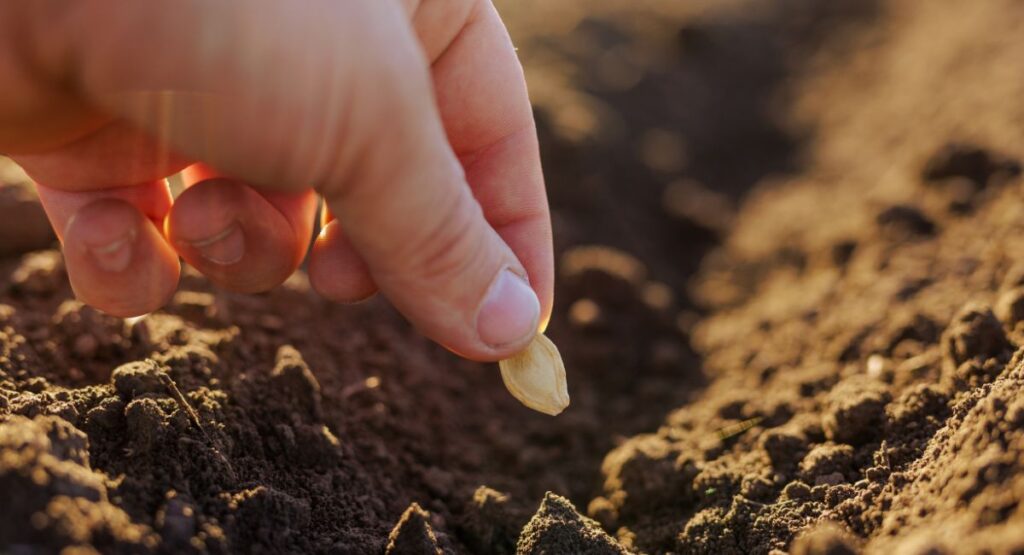
Start Your Backyard Vegetable Garden Pharmacy Today
Ready to transform your backyard into a natural pharmacy?
Your health revolution starts in the soil. Plant it. Grow it. Heal with it.
Your journey to a healthier life starts right in your soil. Planting a backyard vegetable garden is the most sustainable way to ensure your family enjoys nutrient-dense, organic produce every day. At Farm Life HQ, we believe that the kitchen is the heart of the home, but the garden is its pharmacy. Stay connected with us for more expert insights into sustainable agriculture and natural healing. Let’s grow a healthier future, one seed at a time.
—
Farm Life HQ | Sustainable Agriculture & Nutrition Experts
www.farmlifehq.com |@FarmLifeHQ